Key Takeaways
- C9 bulbs (1.25" diameter, E17 base) are the gold standard for Massachusetts roofline and ridge lighting because their larger size reads clearly from the street even through winter snow and fog.
- LED C9s outperform incandescent in sub-zero New England temperatures, consuming up to 80% less energy and lasting 50,000+ hours without the heat and fragility issues of glass filament bulbs.
- Spacing matters by roof style: 12-inch spacing suits the steep pitches of colonial and gambrel homes, while 18-inch spacing works beautifully on the longer, lower ridgelines of Cape Cod–style homes.
- Warm white (2700–3000K) flatters traditional New England architecture; cool white (5000–6000K) pairs best with modern or contemporary facades.
- Booking C9 roofline installations before October is critical in Massachusetts — professional installers fill up fast across the region every season.
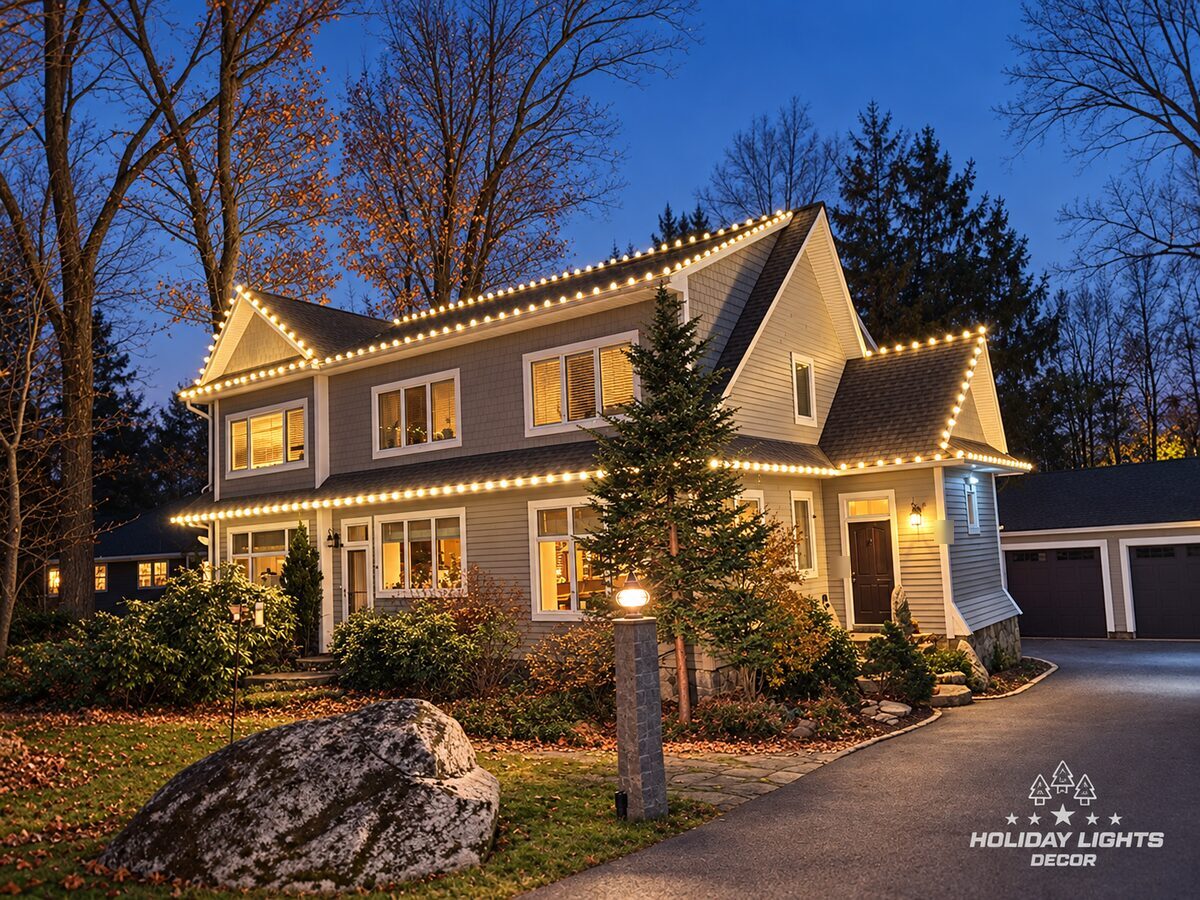
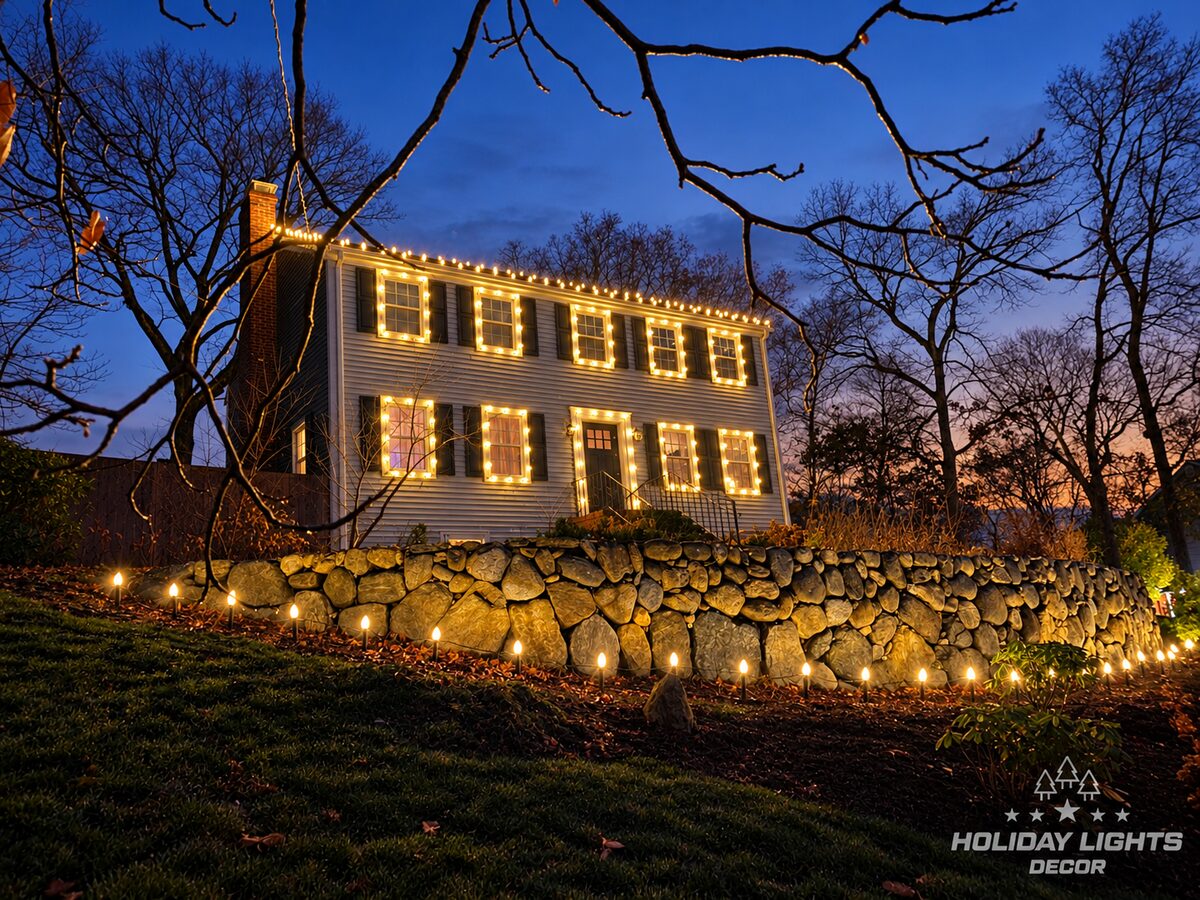
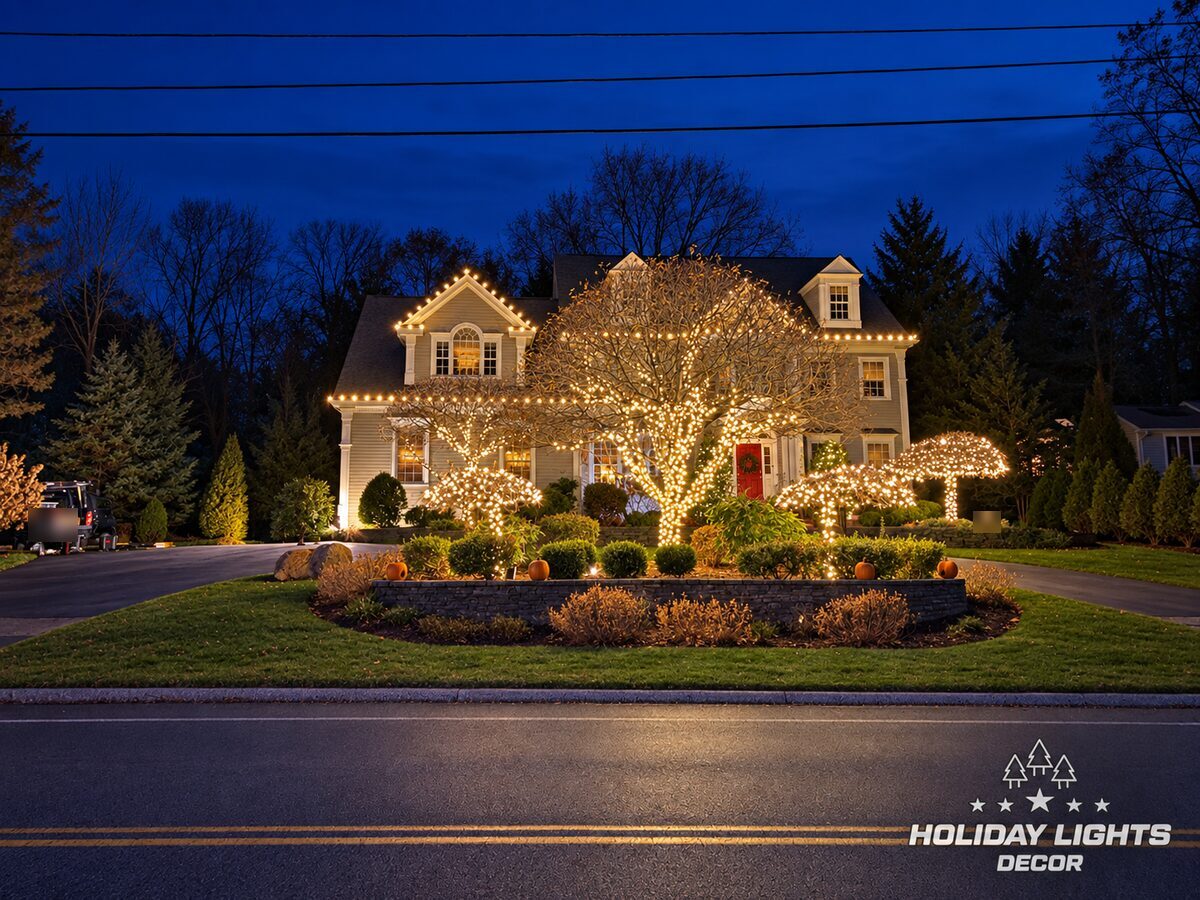
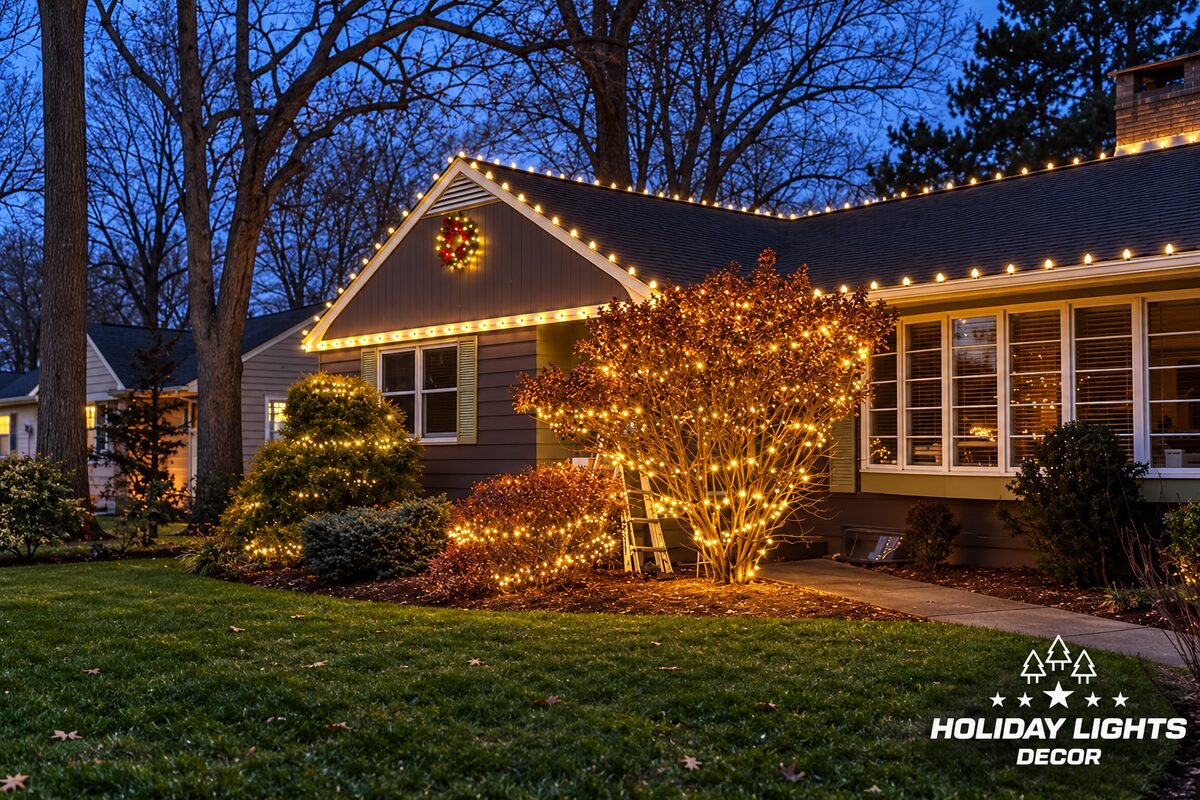
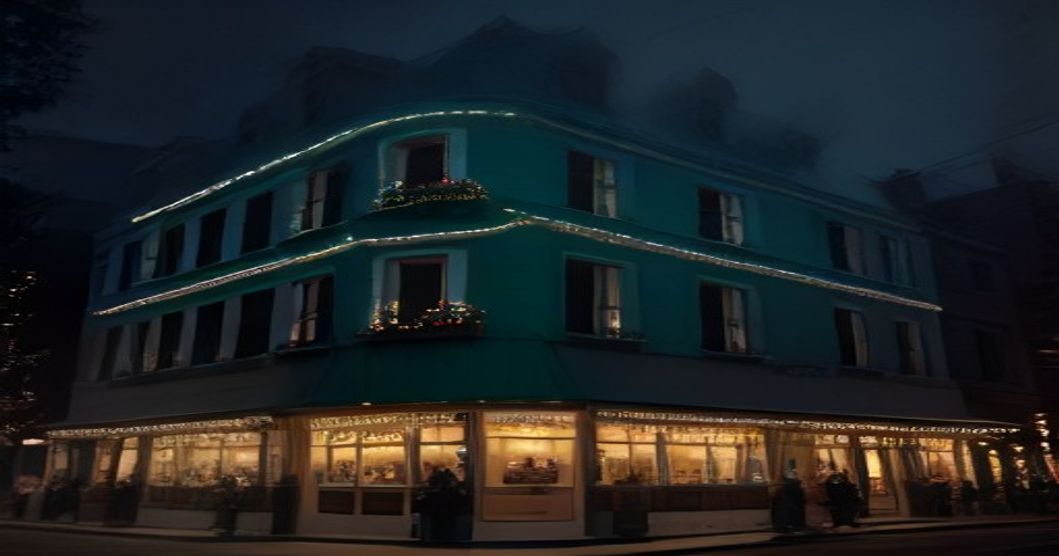
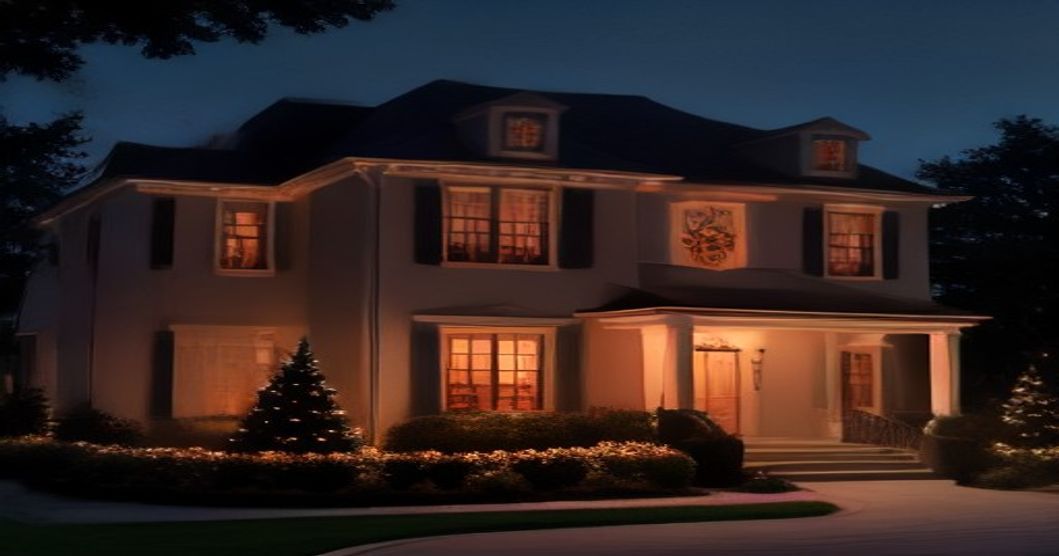
Drive through any Massachusetts neighborhood in December and one thing becomes obvious immediately: the houses that stop traffic are almost always outlined in C9 bulbs. Not mini lights strung haphazardly across a gutter. Not icicle strands drooping unevenly in the cold. Big, bold, evenly spaced C9s marching along the roofline, ridge, and gable ends — a look that says this home was done right. Whether you own a 1920s colonial in a historic district or a newer Cape on the South Shore, understanding how C9 bulbs work, which type to choose, and how to space them for your specific roof geometry will determine whether your display looks professional or merely adequate. This guide covers everything.
C9 vs. C7 Bulbs: Size, Base, and Why C9 Dominates Massachusetts Rooflines
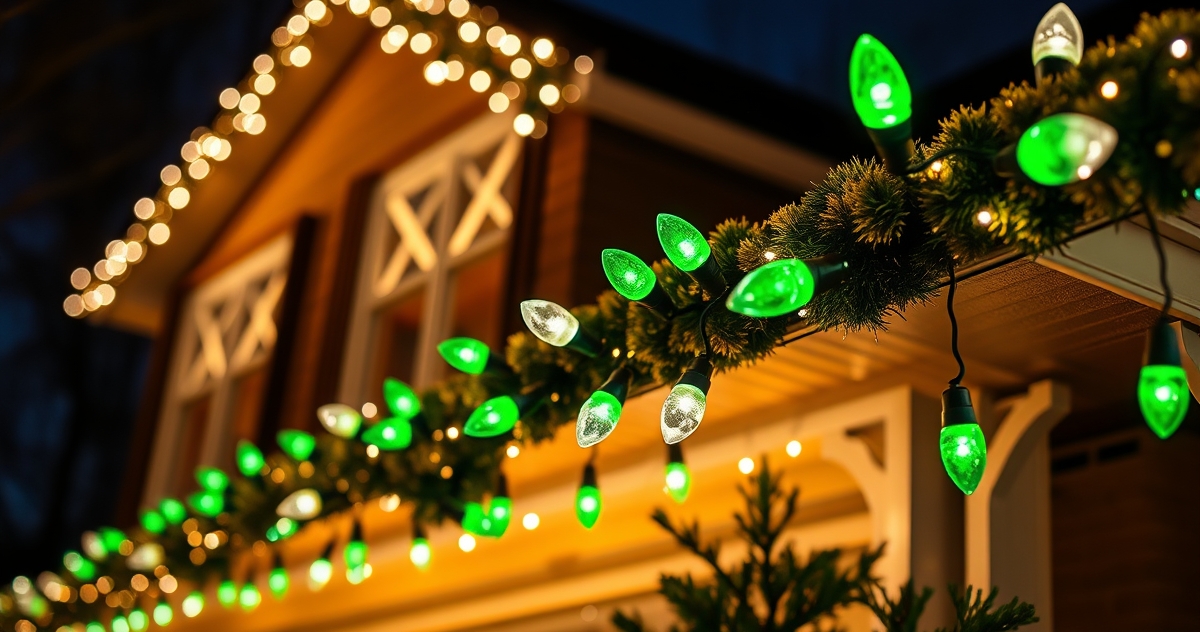
The difference between C9 and C7 bulbs comes down to three measurable things: diameter, base size, and visual impact at distance. C9 bulbs measure approximately 1.25 inches in diameter with an E17 intermediate base, while C7 bulbs are about 0.875 inches in diameter with an E12 candelabra base. That size gap — roughly half an inch — sounds minor until you consider how holiday lighting actually works: it is viewed from 30 to 100 feet away, often through bare tree branches, falling snow, or Massachusetts coastal fog.
At roofline heights of 18 to 35 feet, C7 bulbs can appear to disappear against a dark sky. C9 bulbs hold their visual weight. That is why professional installers across Massachusetts default to C9s for any roofline, ridge, gable, or dormer application. C7s still have their place — porch railings, low window frames, and close-proximity decorating where their smaller footprint is actually an advantage — but for the long runs that define a Massachusetts home's silhouette, C9s win every time.
If you want to dig deeper into the professional case for C9 rooflines specifically, our detailed breakdown at professional C9 roofline lighting for Massachusetts homes covers product selection and clip systems in granular detail. And if you're still deciding between C7 and C9 for a specific application, see our full comparison of C7 vs. C9 Christmas lights.
LED vs. Incandescent C9 Bulbs in Sub-Zero Massachusetts Winters
LED C9 bulbs outperform incandescent in every measurable category that matters for Massachusetts winters, starting with cold-weather reliability. Traditional incandescent C9s use a glass envelope surrounding a tungsten filament — a design that becomes brittle and fragile below 20°F, exactly the temperatures Worcester, Springfield, and the Pioneer Valley regularly see from December through February. LED C9s contain no filament. Their semiconductor chips actually become slightly more efficient at lower temperatures, meaning a January cold snap that kills an incandescent string leaves an LED string glowing brightly.
Energy and Cost Comparison
| Feature | Incandescent C9 | LED C9 |
|---|---|---|
| Wattage per bulb | 5–7 watts | 0.5–1 watt |
| Lifespan | 1,000–3,000 hours | 50,000+ hours |
| Heat output | High — melts snow unevenly, can warp plastic clips | Minimal — safer near gutters and fascia |
| Cold-weather performance | Degrades below 20°F | Stable or improves below 20°F |
| Energy cost (100-bulb string, 45 days) | ~$18–$25 | ~$2–$4 |
| Color consistency | Warm only; dims with age | Consistent across full lifespan |
For a typical Massachusetts colonial with 150 feet of roofline (roughly 100–150 C9 bulbs at 12-inch spacing), switching from incandescent to LED can save $40–$70 in electricity over a single holiday season while eliminating mid-season burnouts. The upfront cost of LED C9s is higher — expect to pay $0.80–$2.00 per LED bulb versus $0.20–$0.50 for incandescent — but the payback period is usually one to two seasons. See our cost deep-dive at how much holiday lights cost for a 2,000 sq ft Massachusetts home.
What About Permanent LED C9 Installations?
Permanent C9 systems use professional-grade LED bulbs rated for year-round outdoor exposure, typically IP65 or IP67 waterproofing. These are the systems our team installs under our permanent lighting service — channel-mounted on the fascia, virtually invisible during the off-season, and activated on demand for any holiday or event. If you plan to use C9s for more than two or three seasons, permanent installation is almost always the smarter long-term investment.
Spacing Guide: 12-Inch vs. 18-Inch for Massachusetts Roof Styles
Proper C9 spacing is the single biggest visual differentiator between a professional-looking display and a DIY result that reads as uneven or sparse. The two standard spacings — 12 inches and 18 inches — are not interchangeable, and the right choice depends directly on your home's roof pitch, eave length, and architecture.
12-Inch Spacing: Colonial, Gambrel, and Steep-Pitch Homes
Massachusetts is filled with colonial, saltbox, and gambrel-roofed homes whose steep pitches (8/12 to 12/12 rise-to-run ratios) create short, high-contrast rooflines. On these homes, 12-inch C9 spacing creates a dense, luminous band that holds visual weight against the steep angle. A colonial with a 40-foot front roofline needs approximately 40 bulbs at 12-inch spacing — a manageable, cost-effective run that looks deliberately professional. Spacing wider than 12 inches on a steep colonial pitch can appear gappy and amateur.
18-Inch Spacing: Cape Cod and Ranch-Style Homes
Cape Cod–style homes — arguably the most common housing type on the South Shore, Cape, and Islands — feature long, low rooflines with gentle pitches (4/12 to 6/12). Their extended eave runs (sometimes 60–80 feet across the front) create a different visual challenge: too many closely spaced bulbs can look cluttered and heavy. At 18-inch spacing, C9s on a Cape roofline read as elegant and intentional, with enough breathing room between each bulb to let the architecture show. A 70-foot Cape eave needs roughly 47 bulbs at 18-inch spacing — versus 70 at 12-inch — a meaningful cost difference over a full installation.
Ridge Lines, Gables, and Dormers
Beyond the primary eave, Massachusetts homes often feature ridgelines, gable ends, and dormers that benefit from C9 accent lighting. Ridge lines typically look best at 12-inch spacing regardless of roof style, since the ridge sits high and far from the viewer. Gable ends on colonial homes can be outlined in C9s at 12-inch spacing to frame the home's silhouette dramatically. Dormers — common on capes and 1.5-story homes — are best handled individually, with their own short C9 runs and careful clip placement to preserve the roofline integrity. Our residential installation team designs every layout to account for these architectural details before a single clip goes up.
Color Temperature Guide: Warm White, Cool White, and Multi-Color for Massachusetts Homes
Color temperature — measured in Kelvin — determines the emotional tone of a C9 display as much as any other single factor. Choosing the wrong temperature for your home's architecture is the fastest way to make an expensive installation look off.
Warm White (2700–3000K): The Traditional New England Standard
Warm white C9 bulbs produce a soft amber-gold glow that echoes candlelight, fire, and the historic gas-lamp aesthetic of older Massachusetts neighborhoods. They are the undisputed choice for colonial, Federal, Victorian, and craftsman-style homes — essentially any home built before 1980 and any home with brick, clapboard, cedar shingle, or painted wood siding. Warm white reads as timeless and elegant against snow, which amplifies the warmth of the light through reflection. It also flatters the buff and cream colors common in Massachusetts colonial exteriors. For a detailed look at how warm white transforms exteriors, see our post on warm white lighting in Massachusetts.
Cool White (5000–6000K): Modern and Contemporary Facades
Cool white C9 bulbs emit a crisp, blue-tinted white that reads as contemporary, clean, and architectural. They are the right choice for homes built after 2000 with modern materials — fiber cement, dark-stained wood, stone veneer, or gray and charcoal paint schemes. Cool white also works beautifully on coastal homes where the light echoes sea and sky. The key caution: on a traditional or historic home, cool white can look cold and incongruous. Context matters enormously.
Multi-Color: Bold, Festive, and Family-Forward
Multi-color C9 bulbs — typically cycling through red, green, blue, orange, and warm white — deliver the classic mid-century American Christmas look that many Massachusetts families grew up with. Modern LED multi-color C9s are dramatically more vivid than their incandescent predecessors, with saturated reds and greens that read beautifully against white snow and dark winter skies. If your family identifies with the traditional American Christmas aesthetic, multi-color C9 rooflines remain a genuinely joyful choice. Check out our ideas for patriotic C9 displays for additional color inspiration beyond the standard holiday palette.
Single-Color Accent Options: Red and Green
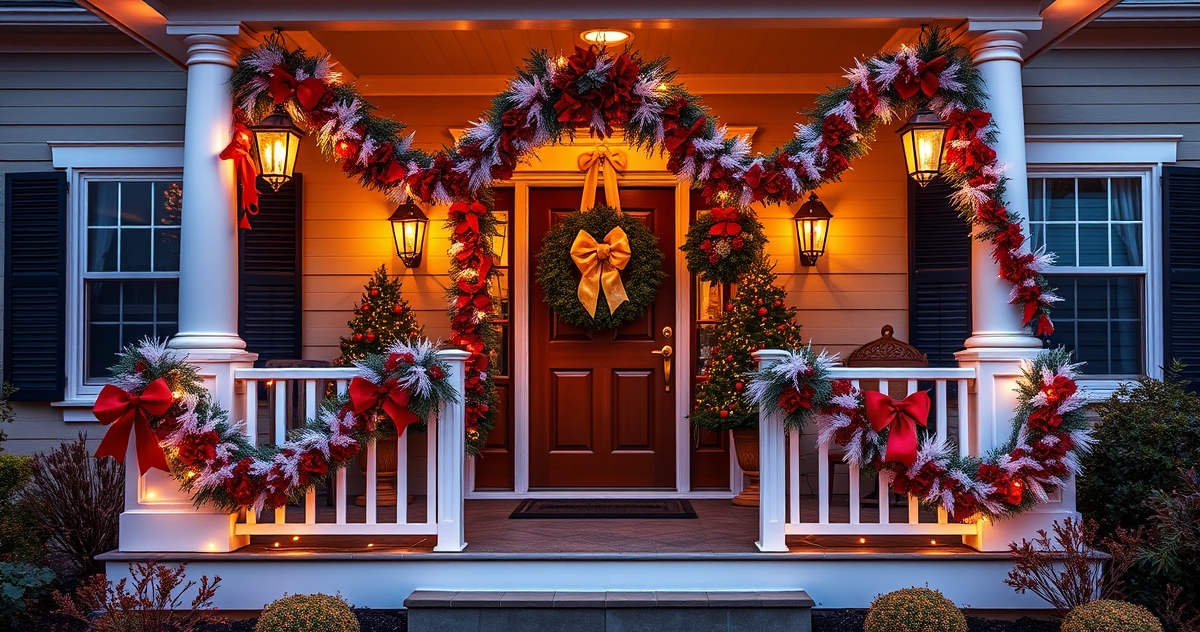
Some Massachusetts homeowners opt for single-color runs — all red or all green — as accent strips to complement garlands, wreaths, and bows at the entry. All-red C9s along a porch roofline with green garland wrapped columns create a striking, high-contrast display. All-green C9s on dormers paired with warm white on the main roofline adds depth and dimension. These combinations work especially well on larger homes where a single uniform color across the entire roofline can look monotonous.
How to Make C9 Displays Look Professional: Clips, Runs, and Power Management
Professional-looking C9 installations share four non-negotiable characteristics: consistent clip type, straight runs, managed power loads, and no visible extension cords. Shingle clips or all-in-one light clips that grip the bulb socket and hook over the shingle edge create the cleanest roofline look — every bulb hangs at the same angle and height. Gutter clips work on homes with aluminum gutters but require more care to avoid spacing drift over long runs.
Power management is critical for C9 strings: most 25-foot commercial-grade C9 strings draw 2–5 amps at 120V. Connecting more than three incandescent strings in series on a single 15-amp circuit risks breaker trips — a common amateur mistake that ruins an otherwise beautiful display mid-season. LED C9 strings draw far less, allowing longer series runs safely. Our team always maps circuits before installation to eliminate this risk. For more on making any display look professionally executed, see our guide on how to make Christmas lights look professional.
Interested in how C9 installations pair with tree lighting and other landscape elements? Our tree wrapping guide and shrub lighting guide walk through complementary techniques that complete a full-property display.
Timing Your C9 Installation in Massachusetts
Massachusetts homeowners who wait until November to book C9 roofline installations consistently struggle to find availability. Professional installation crews book up across Eastern and Central Massachusetts by mid-October most years. Weather windows for safe rooftop work narrow significantly after mid-November, when early nor'easters and freezing rain become real scheduling risks. The practical advice: book in August or early September for the widest selection of installation dates and the best pricing. Our post on booking holiday light installation in August details exactly why early reservations matter — and what early-bird customers save. You can also review when to book Christmas light installation in Massachusetts for a month-by-month planning guide.
When the season ends, professional removal and storage service protects your C9 bulbs and cords through the off-season, extending their lifespan and ensuring they're ready for flawless reinstallation next November.
Frequently Asked Questions
What is the difference between C9 and C7 Christmas light bulbs?
C9 bulbs measure approximately 1.25 inches in diameter and use an E17 intermediate base, while C7 bulbs are smaller at roughly 0.875 inches with an E12 candelabra base. C9 bulbs are significantly more visible at distance, making them the preferred choice for roofline, ridge, and gable applications on Massachusetts homes. C7 bulbs work better for close-proximity applications like porch railings and window frames where their smaller size is an advantage rather than a limitation.
Do LED C9 bulbs work well in cold Massachusetts winters?
Yes — LED C9 bulbs perform better in cold weather than incandescent alternatives. Their semiconductor design actually becomes slightly more efficient at temperatures below freezing, whereas incandescent C9s use glass-filament technology that grows brittle and prone to failure in the sub-zero temperatures common in Worcester, Springfield, and the Pioneer Valley. LED C9s also consume 80–90% less electricity and last 50,000+ hours, making them the clear long-term choice for Massachusetts homeowners.
What C9 bulb spacing should I use on a colonial-style Massachusetts home?
Colonial homes in Massachusetts typically feature steep roof pitches (8/12 to 12/12) and relatively short eave runs. For these rooflines, 12-inch C9 spacing creates a dense, visually substantial band of light that reads as professional and intentional from the street. Wider spacing — 18 inches or more — can appear gappy and sparse against a steep colonial roofline, diminishing the visual impact of the installation.
What color temperature is best for traditional New England homes?
Warm white C9 bulbs in the 2700–3000K range are the best match for traditional Massachusetts architecture — colonials, Victorians, Federals, and craftsman-style homes. The amber-gold glow complements clapboard, brick, and painted wood siding, and it reads beautifully against snow. Cool white (5000–6000K) is better suited to modern or contemporary homes with darker exterior materials. Multi-color C9s are a strong choice for families who prefer the classic festive American Christmas aesthetic.
How many C9 bulbs do I need for my Massachusetts home's roofline?
Measure your total roofline length (front eave, ridge if applicable, and any gable or dormer runs you want to include), then divide by your spacing. At 12-inch spacing, you need one bulb per linear foot. At 18-inch spacing, divide your linear footage by 1.5. A typical 40-foot colonial front eave needs 40 bulbs at 12-inch spacing; a 70-foot Cape eave needs roughly 47 bulbs at 18-inch spacing. Always add 10–15% extra bulbs for replacements and corner adjustments.
Is it worth hiring a professional to install C9 bulbs on my Massachusetts roof?
For most Massachusetts homeowners, professional C9 roofline installation is absolutely worth it. Rooftop work in November and December carries genuine fall and weather risks, professional crews carry insurance, and the visual result — straight runs, consistent spacing, hidden cords, and proper load balancing — is dramatically better than most DIY attempts. Professional installations also typically include end-of-season removal and storage, protecting your investment. See our full breakdown of why professional Christmas light installation costs what it does for a transparent look at what you're paying for.