Key Takeaways
- Commercial-grade C9 LED bulbs last 5–10x longer than store-bought strings and deliver a far bolder red, white, and blue roofline display for Massachusetts 4th of July celebrations.
- A true alternating red-white-blue pattern requires 12-inch socket spacing and a planned bulb count based on your home's linear roofline footage.
- Massachusetts's humid July weather — average relative humidity of 70–80% — demands UL-listed weatherproof sockets and fully encapsulated LED bulbs rated for wet locations.
- Booking a professional installation in late June locks in your preferred date and ensures the display is up well before Independence Day weekend.
- The same C9 infrastructure used for a 4th of July display can be repurposed for Halloween, Thanksgiving, and Christmas by simply swapping bulb colors.
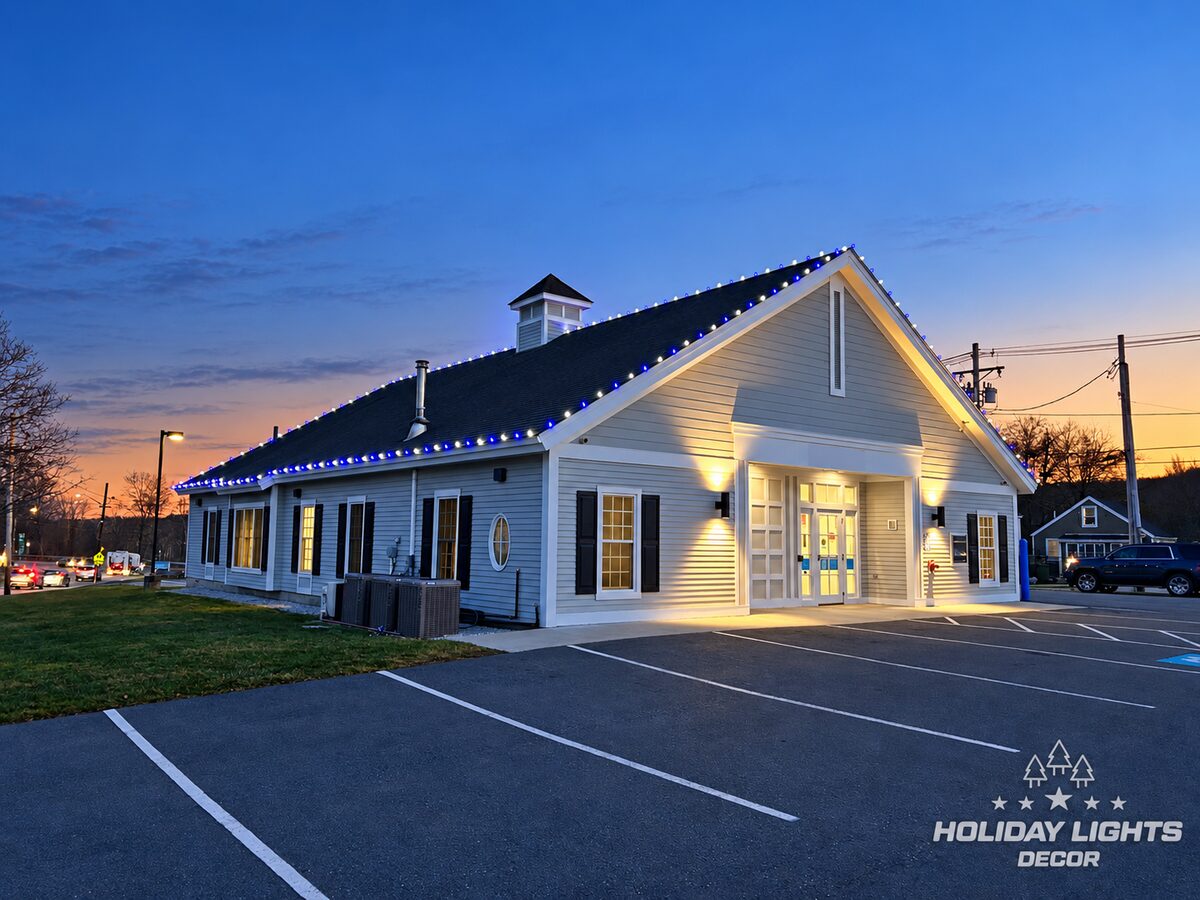
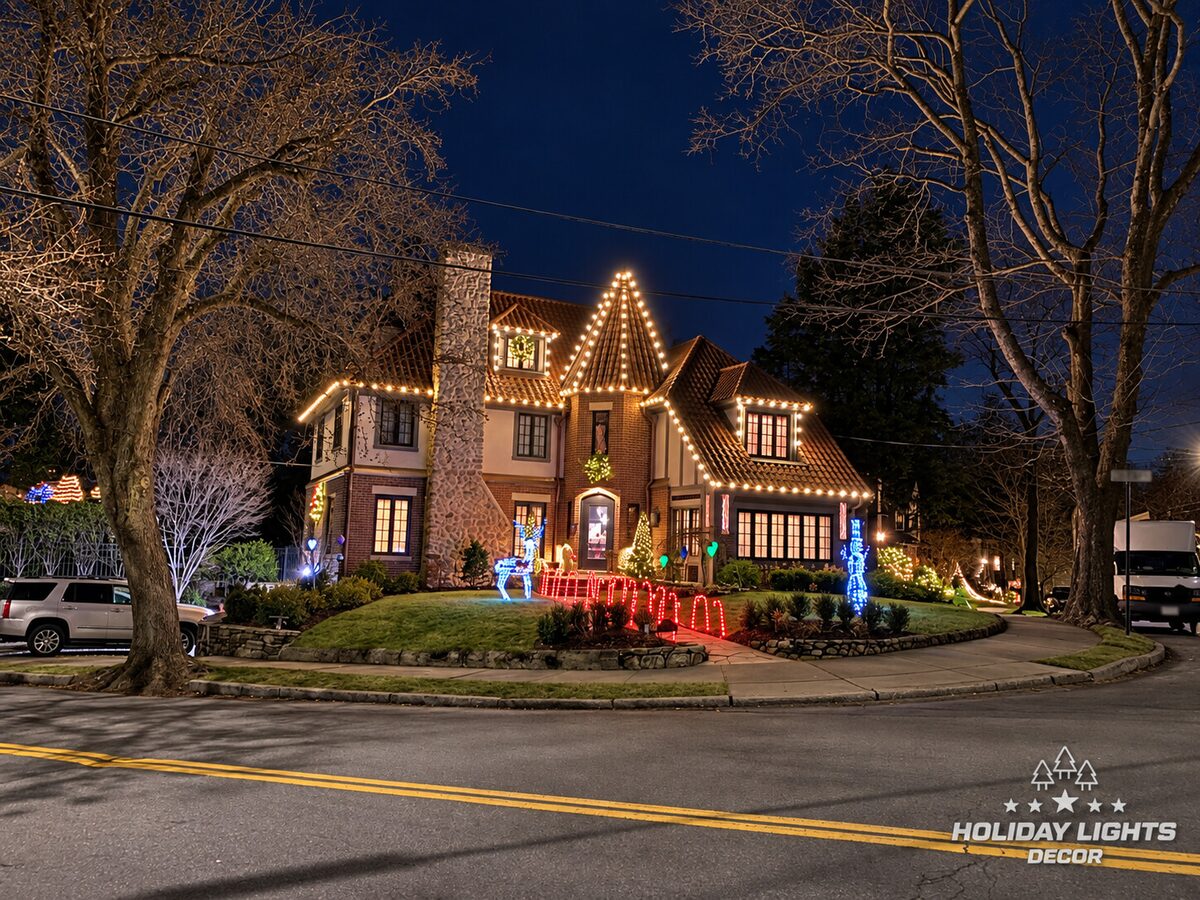
Drive through almost any Massachusetts neighborhood the week of July 4th and you'll see it: that unmistakable glow of red, white, and blue stretching across rooflines, wrapping around porch columns, and outlining garage doors from Cape Cod to the Berkshires. What separates the displays that stop traffic from the ones that barely register is almost always the same thing — commercial-grade C9 bulbs on a properly spaced stringer, not a hastily unwound box of drug-store lights. If you want a patriotic display worthy of the Commonwealth's rich Revolutionary history, here is everything you need to know about building it right.
Why C9 Bulbs Are the Gold Standard for Patriotic Roofline Displays
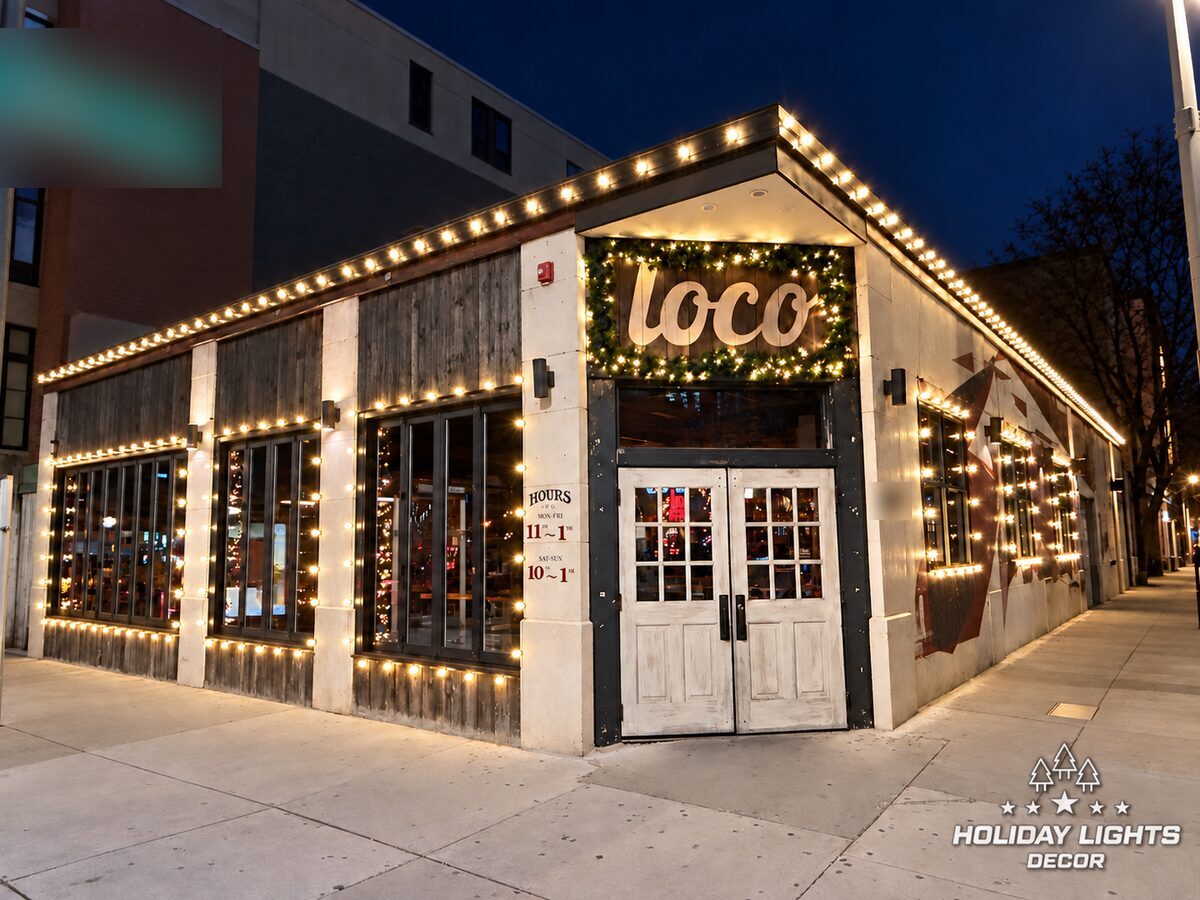
C9 bulbs produce the boldest, most visible roofline glow of any residential light format because of their size: each bulb measures roughly 1.5 inches in diameter and stands about 2.5 inches tall, putting out significantly more light per socket than a C7 or a standard mini-light. For a 4th of July patriotic display viewed from the street — often 50 to 100 feet away — that size difference is critical.
Commercial-grade C9 LED bulbs specifically outperform store-bought options on every measurable metric. See our deep dive on professional C9 roofline lighting for Massachusetts homes for a full breakdown, but here are the headline numbers:
- Lifespan: Commercial C9 LEDs are rated for 50,000+ hours versus 1,000–3,000 hours for incandescent store-bought strings.
- Color saturation: True-color red and true-color blue LEDs use dedicated phosphor coatings that produce a vivid, deep hue — not the washed-out pink-red or purple-blue you often see from budget imports.
- Energy draw: A commercial C9 LED bulb typically draws 0.5–1 watt compared to 5–7 watts for an incandescent C9, meaning a 100-bulb display costs pennies per night to run.
- Structural integrity: Commercial sockets are molded from UV-stabilized, heavy-gauge PVC and fitted with locking bulb collars that keep bulbs seated even in gusty coastal Massachusetts conditions.
For a deeper look at what separates commercial from consumer-grade products, our article on what commercial-grade Christmas lights actually mean explains the construction differences in plain language.
Spacing and Socket Guide: Building a Bold Red-White-Blue Pattern
Achieving a clean, rhythmic red-white-blue alternating pattern starts with your socket spacing — and 12 inches on center is the industry standard for roofline C9 displays on most Massachusetts homes.
Calculating Your Bulb Count
Measure the linear footage of every roofline run you plan to light: front ridge, eave edges, gable ends, porch overhangs, and garage roofline. Add those numbers together. Divide by your socket spacing in feet (1 foot for 12-inch spacing) and you have your total socket count, which equals your total bulb count.
Example: A colonial with 80 ft of front eave, two 30-ft gable runs, and a 40-ft garage eave = 180 linear feet = 180 bulbs at 12-inch spacing.
Patterning the Colors
A true alternating red-white-blue pattern repeats in sets of three. This means your total bulb count should ideally be divisible by three for a seamless wrap. If it isn't, plan your break points at inside corners where a color shift is less noticeable from the street.
| Socket Position | Bulb Color | Notes |
|---|---|---|
| 1, 4, 7, 10… | Red | Start with red at visible corners for maximum impact |
| 2, 5, 8, 11… | White (warm or cool) | Cool white reads as crisper and more patriotic against red and blue |
| 3, 6, 9, 12… | Blue | Cobalt/true blue, not purple-blue; verify color temp with supplier |
Socket Spacing Variations
Some homeowners with larger lots or two-story Colonials prefer a 6-inch spacing for an ultra-dense, almost solid wall of color. This doubles your bulb count but creates a dramatically bolder look visible from a greater distance. On compact Cape Cod or ranch-style homes with shorter eave runs, 12-inch spacing provides a clean, balanced result without overwhelming the architecture.
Clip Selection for Massachusetts Rooflines
Use all-in-one shingle/gutter clips rated for C9 stringers. These slide over the gutter lip or under asphalt shingles without penetrating the roofing material — critical in Massachusetts where improper fastening can void roofing warranties and create leak paths ahead of the region's late-summer rain season.
Massachusetts Humidity and Weatherproofing Your 4th of July Display
Massachusetts in July is warm, often muggy, and prone to afternoon thunderstorms — conditions that demand genuine weatherproofing rather than an afterthought. The Commonwealth's coastal zones (Boston's North Shore, the South Shore, Cape Cod, the Islands) regularly see relative humidity above 80% combined with salt-laden air, which is particularly corrosive to cheap metal contacts.
What to Look for in Wet-Rated C9 Components
- UL WET location rating: Both the stringer cord and each individual bulb should carry a UL WET or IP65/IP67 rating. IP44 (splash-proof) is not sufficient for prolonged exposure during July rainstorms.
- Molded rubber socket collars: Sockets with molded rubber gaskets around the bulb base prevent moisture from wicking into the socket and corroding the contacts.
- Dielectric grease on connections: A small amount of dielectric grease applied to each bulb's base before seating it creates a moisture barrier that extends contact life significantly in humid coastal environments.
- GFCI-protected circuits: All outdoor circuits used for July 4th displays should be GFCI-protected at the outlet. This is a Massachusetts electrical code requirement and a genuine safety necessity when running lights through summer rain.
LED vs. Incandescent in Heat and Humidity
Incandescent C9 bulbs generate substantial heat — each bulb running at 5–7 watts, across a 180-bulb display, adds up to nearly 1,000 watts of heat radiating from your roofline on an already warm July night. That heat accelerates socket degradation and creates burn risks if foliage is close to the roofline. Commercial C9 LEDs running at under 1 watt each eliminate this problem entirely while delivering equal or greater visible brightness. Our comparison of whether commercial-grade lights are worth the investment covers this cost-benefit analysis in detail.
Designing the Full Patriotic Display: Beyond the Roofline
A roofline display is the anchor, but Massachusetts homes that truly shine for the 4th of July extend the theme strategically to other architectural elements.
Porch Columns and Railings
Wrap porch columns in red, white, and blue mini-light strings — either spiraling upward in alternating colors or banding in horizontal stripes of three. For a cleaner look, commercial-grade 5mm wide-angle LED mini lights in red, white, and blue hold their color vibrancy better outdoors than traditional M5 strawberry-style bulbs.
Landscape Uplighting
Place red, white, and blue PAR38 or GU10 LED spotlights at the base of large shade trees to project color into the canopy. On a dark July night this creates a dramatic, layered effect that complements the roofline C9 display beautifully. Pair with patriotic-colored landscape pathway lights lining the front walk for a cohesive entryway look.
Garlands, Wreaths, and Bows
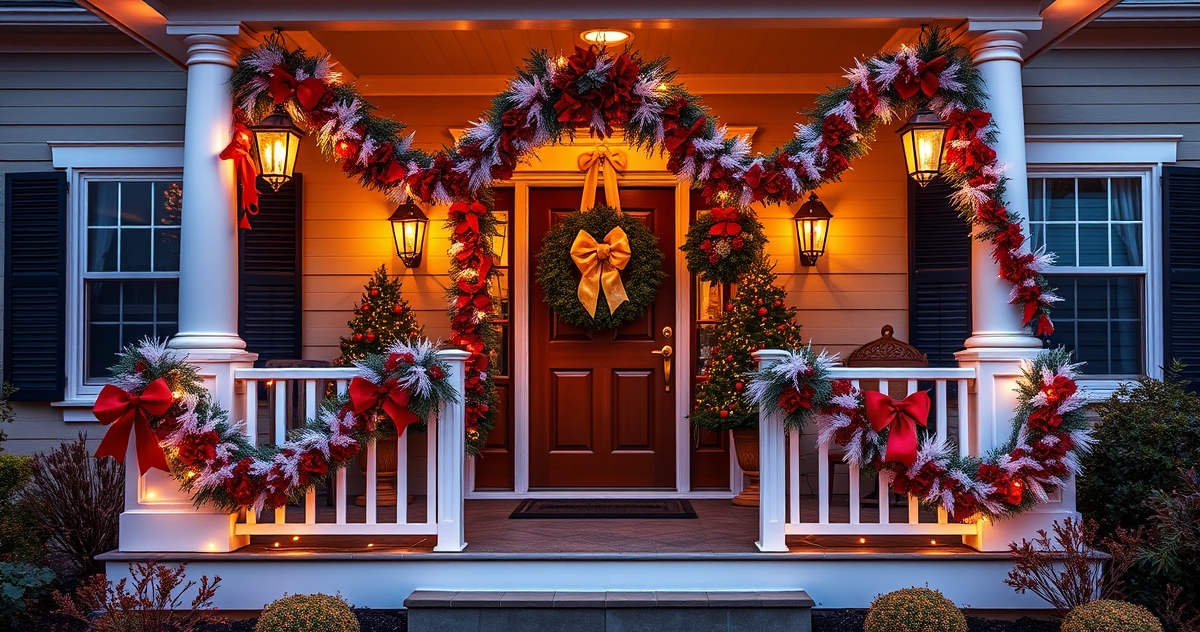
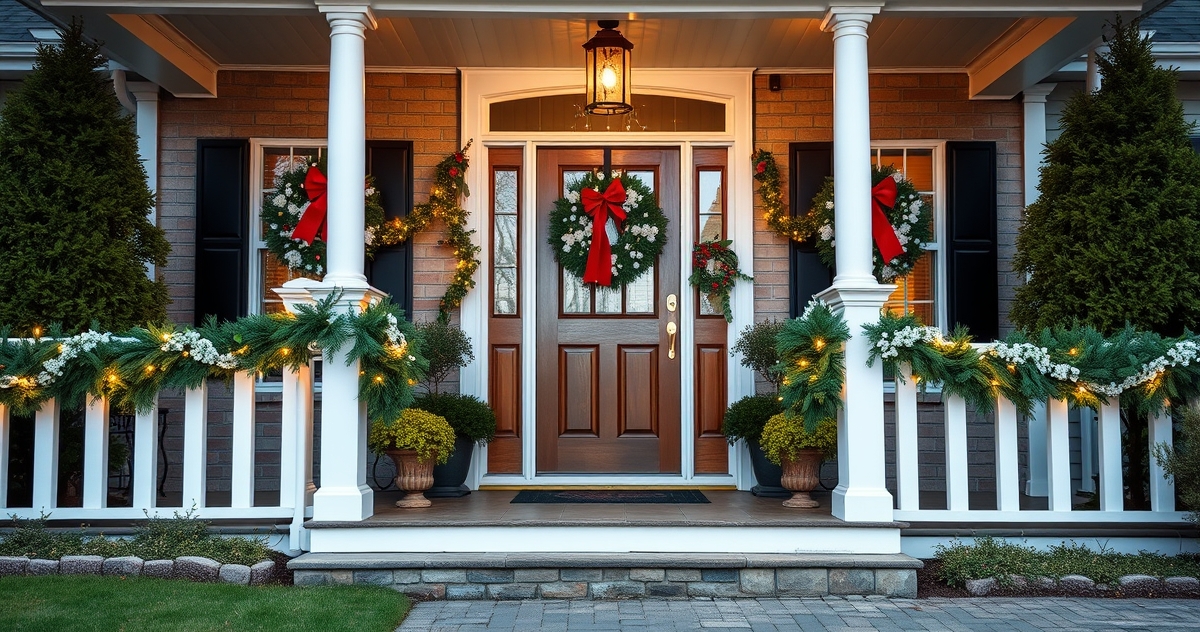
Pre-lit commercial garlands in red, white, and blue are available in both mixed-color and single-color varieties. Draping a mixed-LED garland over a front door arch or along a porch railing adds texture and dimension. Large fabric bows in red, white, and blue at the peak of each gable or on either side of the front door add a festive, finishing touch without additional wiring.
Flag Pole and Entry Lighting
A simple pair of blue upward-facing spotlights illuminating an American flag at night is both respectful and visually striking. Many Massachusetts municipalities actually encourage or require proper flag illumination as a condition of flying the flag after sunset — a detail worth noting as you plan your full display.
Planning and Booking Your Installation in Massachusetts
The biggest mistake Massachusetts homeowners make with 4th of July lighting is waiting until late June. Professional installation crews book up quickly in early to mid-June as both July 4th clients and early-season commercial accounts fill the calendar. If you want your display installed and tested before the holiday weekend, book by mid-June at the latest.
Learn more about timing on our guide to when to book holiday light installation in Massachusetts — many of the same scheduling principles apply to summer patriotic displays. A professional crew will handle roofline access safely (no ladder accidents on a hot July afternoon), ensure all wiring meets code, and test every socket before leaving your property.
One of the most valuable aspects of professional installation is the infrastructure investment. The C9 stringer, clips, and power connections installed for your 4th of July display can be left in place, bulbs swapped out, and reused for Halloween orange-and-purple displays, warm white Thanksgiving lighting, and Christmas red-and-green or multicolor schemes — spreading the installation cost across multiple seasons. Our permanent lighting service is specifically designed around this multi-season philosophy.
Cost Expectations for a C9 Patriotic Display in Massachusetts
Professional C9 roofline display pricing in Massachusetts varies based on linear footage, number of architectural features, and whether you own or rent the equipment. As a general benchmark:
- Small ranch or cape (under 100 linear ft): $400–$700 professionally installed with commercial LED C9s
- Medium colonial (100–200 linear ft): $700–$1,200 installed
- Large or multi-feature home (200+ linear ft, columns, landscape accents): $1,200–$2,500+
These figures include design, installation, materials, and removal. For a deeper breakdown of how professional installers price their work, see our guide on how much it costs to have a house professionally decorated. While that article focuses on Christmas, the labor and material cost structures are directly comparable.
If you're curious about DIY material costs before committing to professional service, our post on where to get commercial-grade Christmas lights covers sourcing options — though for roofline work at any significant height, professional installation is strongly recommended for safety reasons.
Frequently Asked Questions
What makes C9 bulbs better than standard string lights for a 4th of July roofline display?
C9 bulbs are larger (approximately 1.5 inches in diameter) and mount on spaced sockets rather than a pre-wired fixed string, which gives you full control over color placement and makes individual bulb replacement simple. For a patriotic red-white-blue pattern visible from the street, their size and brightness far surpass standard mini-light strings. Commercial-grade C9 LED bulbs also carry wet-location ratings essential for Massachusetts's humid July weather, something most consumer string lights do not.
How many C9 bulbs do I need for a 4th of July display on my Massachusetts home?
Measure the total linear footage of every roofline run you want to light, then divide by your socket spacing in feet. At the standard 12-inch spacing, one bulb is needed per foot of run. A typical Massachusetts colonial with 150 linear feet of eave and gable roofline will need approximately 150 C9 bulbs — 50 red, 50 white, and 50 blue for a balanced alternating pattern. Round your total to the nearest multiple of three to keep the color sequence consistent.
Are C9 LED bulbs weatherproof enough for Massachusetts summer storms?
Yes — provided you select bulbs and stringers rated for wet locations (UL WET or IP65/IP67 rating). Massachusetts July brings humidity regularly above 70%, coastal salt air, and afternoon thunderstorms, so wet-rated components are not optional — they're essential. Additionally, all outdoor circuits should be GFCI-protected per Massachusetts electrical code. Commercial-grade C9 systems from professional installers are built to these specifications; many consumer-grade products sold in big-box stores are not.
Can the same C9 stringer setup used for July 4th be reused for Christmas?
Absolutely — this is one of the best reasons to invest in a quality C9 roofline system. The stringer cord, sockets, and clips stay in place year-round on permanent installations. You simply swap out the red, white, and blue bulbs for warm white, multicolor, or red-and-green Christmas sets in November. This multi-season approach dramatically reduces per-event cost and is the foundation of our permanent lighting service.
How far in advance should I book a professional 4th of July light installation in Massachusetts?
Book by mid-June at the latest. Professional crews in Massachusetts begin filling July 4th installation slots in late May and early June, particularly in high-demand coastal communities. Waiting until the last week of June risks losing your preferred installation date entirely. A mid-June booking gives your installer time to source the correct bulb quantities, prepare the layout plan, and schedule a pre-holiday test visit.
Do I need a permit to install C9 roofline lights for the 4th of July in Massachusetts?
Most Massachusetts municipalities do not require a permit for temporary decorative lighting installed on private residential property, provided no new permanent electrical circuits are being added. However, if your installation requires a new dedicated outdoor outlet or a new circuit breaker, that work must be performed by a licensed Massachusetts electrician with the appropriate permit. Always verify with your local building department, as rules vary by town — particularly in historic districts common throughout the Commonwealth.
Ready to light up your Massachusetts home with a show-stopping red, white, and blue C9 roofline display this Independence Day? Contact us today for a free estimate — our team serves residential, commercial, and municipal clients across Massachusetts and would love to help you celebrate in style.