Key Takeaways
- Most Massachusetts holiday lighting installers are fully booked by mid-September—July clients claim the best install windows before the calendar fills.
- Early booking typically locks in current-season pricing, protecting you from late-summer material cost increases on C9 bulbs, garland, and hardware.
- July consultations include full design planning—roofline layout, tree count, warm white vs. multicolor palette—so nothing is rushed come November.
- You can measure your home's linear footage, roof pitch, and tree inventory right now with simple tools to get an accurate quote fast.
- Commercial and municipal clients who book in July often secure multi-property discounts unavailable to last-minute callers.
Picture this: it's the third week of October, the leaves are just starting to turn along the South Shore, and you're finally ready to call about holiday lights. The installer picks up, checks the schedule, and delivers the news you dreaded—the earliest available install date is December 10th, one week before the big family gathering you've been planning since spring. Meanwhile, your neighbor's warm-white C9 roofline has been glowing beautifully since the first of December, because she made one phone call back in July. That's the quiet advantage Massachusetts homeowners who book early never stop talking about.
Why Massachusetts Installers Book Out by September Every Year
Holiday lighting companies in Massachusetts operate on a compressed, weather-dependent calendar that makes fall bookings disappear faster than you'd expect. The install season here runs roughly from late October through the first week of December—a window of only five to six weeks before the holidays arrive. Factor in nor'easters, early frost that makes ladder work dangerous, and the sheer number of homes in dense communities from the North Shore to the Cape, and you're looking at an extremely finite number of install days.
The numbers tell the story clearly. A professional crew can complete roughly four to six residential installs per day. With a team working six days a week across a six-week season, that's a maximum of roughly 144 to 216 residential jobs—and that's assuming no weather cancellations. In a region where demand grows every year, those slots disappear steadily from June onward. By Labor Day, prime November dates are typically claimed. By mid-September, many reputable companies are turning away new clients entirely or offering only their least desirable install windows.
July clients avoid every one of those problems. They book before the rush, choose the exact install date they want, and never deal with a November scramble. If you've ever wondered when the right time to book Christmas light installation in Massachusetts really is, the short answer is: right now, in the middle of summer.
What Early Booking Actually Saves You: Pricing, Scheduling, and Design
Early booking delivers three concrete advantages that late callers simply cannot access: locked-in pricing, priority scheduling, and unhurried design consultation.
Locked-In Pricing on C9 Bulbs and Garland
Material costs for professional-grade holiday lighting—particularly commercial C9 bulbs and premium outdoor garland—fluctuate with supply chain conditions and seasonal demand surges. When you book in July, most Massachusetts installers quote your job at current material pricing and hold that number through your install date. Clients who call in October are quoted at whatever the market looks like then, which is almost always higher. For a mid-sized Cape Cod colonial with 200 linear feet of roofline and a dozen garland swags across the porch columns, the difference between a July quote and an October quote can be $150–$400 on materials alone.
Understanding what holiday lights cost for a typical Massachusetts home is much easier when you're not racing against a deadline. You have time to compare warm white versus multicolor C9 options, review LED versus incandescent trade-offs, and choose the configuration that fits your budget without pressure.
Priority Scheduling and Install-Date Flexibility
Priority scheduling means you choose your install date—not the other way around. July clients typically get first access to the most desirable windows: the first two weekends of November, when weather is still cooperative and there's plenty of time for any touch-up visits before peak season. Late-season callers take whatever's left, often scheduling installs during the chaotic Thanksgiving week or early December when the pressure to finish before holiday gatherings is immense.
Priority clients also receive faster response times if a bulb goes out or a garland section needs adjustment mid-season. When a crew's calendar is already full of November installs for later-booking clients, your mid-December service call moves to the bottom of the list. When you're a July booking, you're a known, valued client whose needs get handled promptly.
Full Design Consultations Without the Rush
Design consultation is arguably the most undervalued benefit of early booking. In July, an installer can sit with you—in person or via video—and walk through your entire property without either party watching the clock. You can discuss whether warm white C9s along the roofline pair better with multicolor mini lights in the shrubs, whether garland on the front door columns should be lit or unlit, and how many trees in the front yard you want wrapped. There's time to pull up professional C9 roofline lighting design examples and talk through what works on a gambrel roof versus a steep colonial pitch.
October consultations, by contrast, are rushed. Installers are juggling dozens of active jobs, design conversations get compressed, and the result is sometimes a display that's nice but not exactly what the homeowner envisioned. July gives you time to get it exactly right.
What to Plan Right Now: A Massachusetts Homeowner's Summer Measurement Guide
You don't need a professional on-site to get a meaningful early-season quote. With a tape measure, a notepad, and about an hour, you can gather the three most important data points your installer needs: linear roofline footage, roof pitch, and tree inventory.
Measuring Linear Roofline Footage
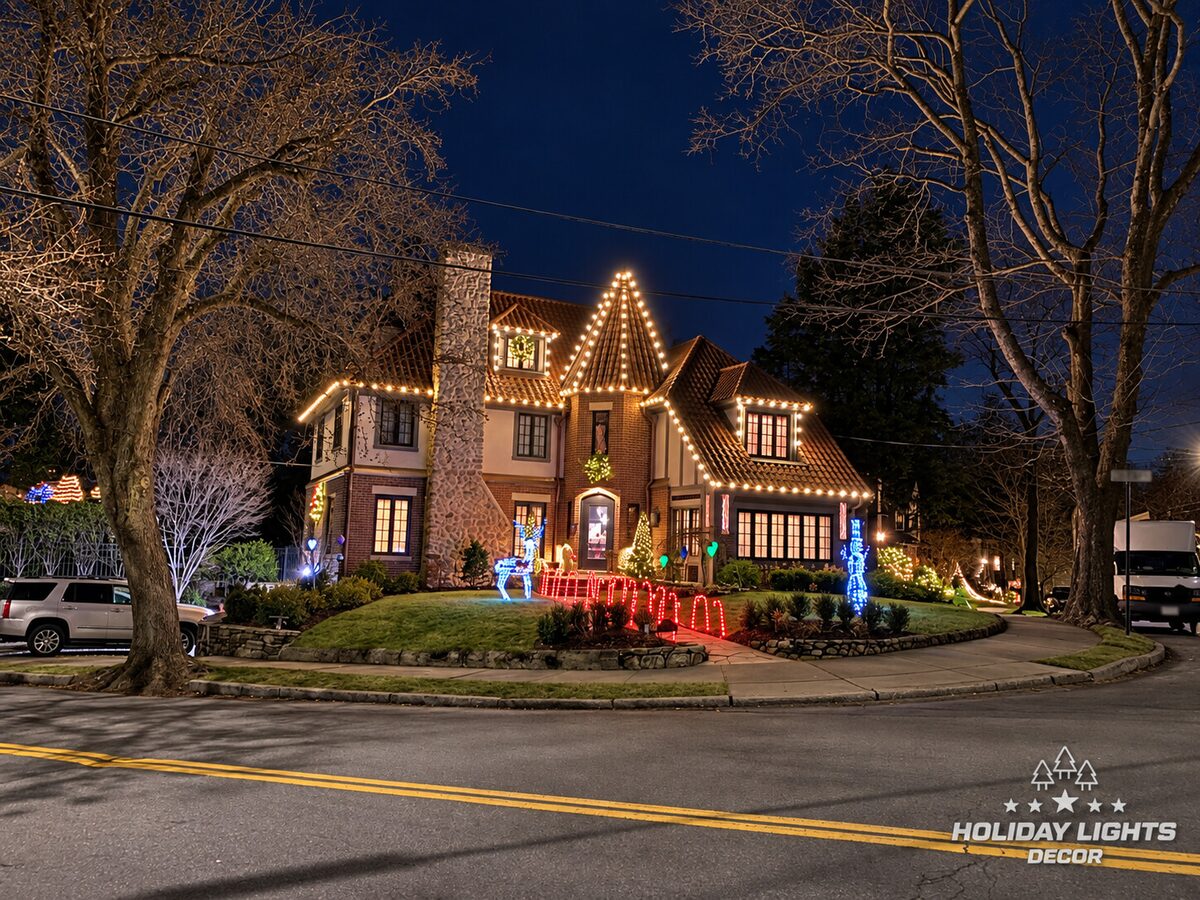
Walk the perimeter of your home and measure every roofline edge you want lit. Include the front facing eaves, the rakes (the slanted edges), and any dormers you want highlighted. Write down each segment separately—a typical Massachusetts Colonial might have 60 feet of front eave, two 30-foot rakes, and a 20-foot dormer, totaling 140 linear feet. Add porch railings, fence lines, and window outlines if you want those lit too. This single number drives the majority of your C9 roofline estimate, so accuracy matters. Check out our detailed guide on what it costs to install 200 feet of Christmas lights as a helpful benchmark once you have your measurement.
Assessing Roof Pitch
Roof pitch affects both installation time and safety equipment requirements, which is why installers ask about it. A low-slope ranch-style roof (4:12 pitch or less) is walk-able and installs quickly. A steep Victorian or farmhouse roof (8:12 or higher) requires additional rigging time, longer ladders, and sometimes a lift, all of which affect your quote. A simple way to estimate pitch: stand at the end of your attic space with a level and a tape measure. Hold the level horizontally against the rafter, measure 12 inches along the level, then measure straight down to the rafter at that point. That vertical measurement is your pitch number (e.g., 6 inches down = 6:12 pitch).
Tree Count and Canopy Spread
Count every tree in your front and side yards that you want decorated. For each one, estimate the height in feet and whether it's a columnar shape (like an arborvitae), a spreading deciduous tree, or a full evergreen. A 15-foot Japanese maple takes roughly 150–200 feet of mini lights to wrap the canopy. A 30-foot blue spruce in warm white can require 600–800 feet of lighting cord and several hours of installation time. Having this list ready when you call means your installer can build an accurate quote without a preliminary site visit—a convenience that benefits everyone in July when schedules are relaxed. For ideas on how tree wrapping is done professionally, our Massachusetts tree wrapping installation guide is an excellent starting point.
The Early-Booking Advantage for Commercial and Municipal Clients
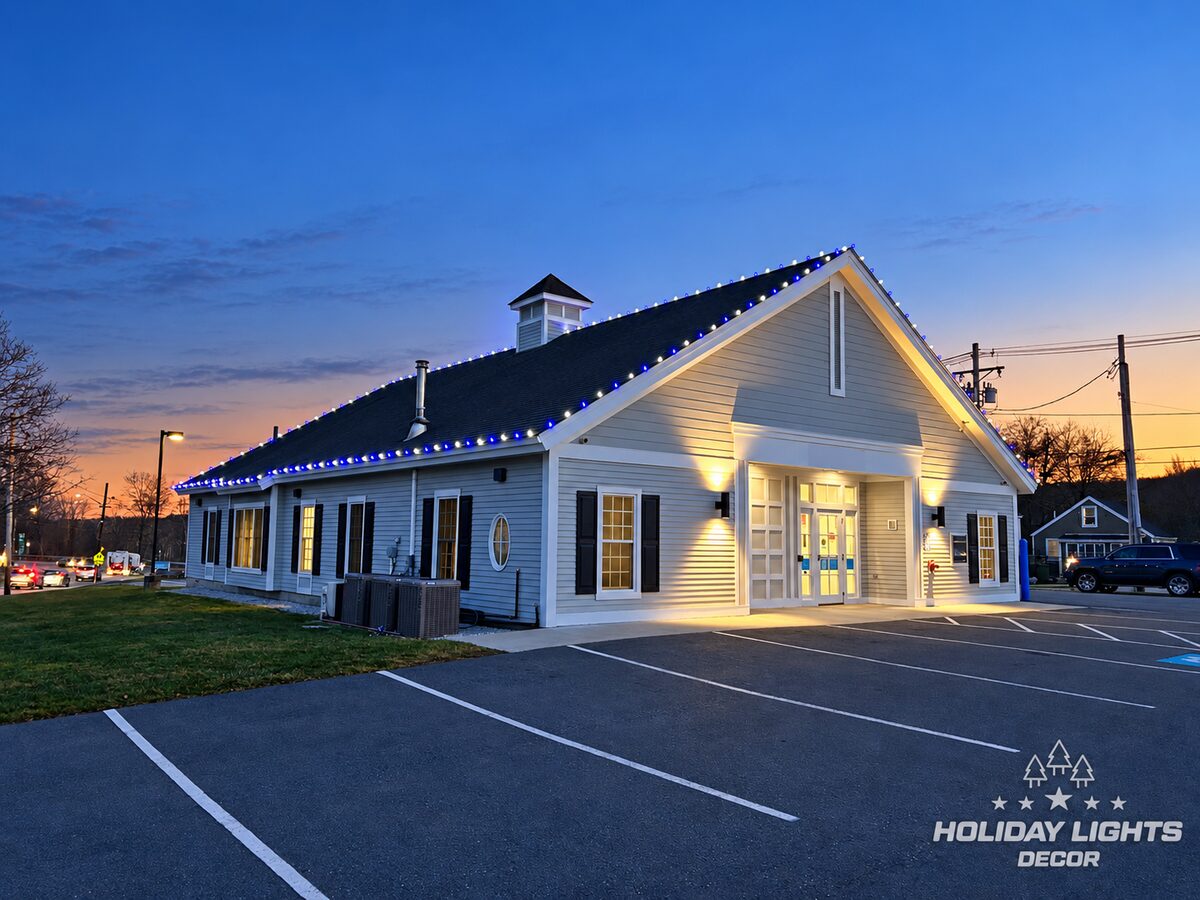
The early-booking calculus is even more compelling for commercial property owners and municipalities. A retail plaza in eastern Massachusetts might need roofline C9s across six storefronts, garland on every entry column, lit wreaths on lamp posts, and large tree wrapping in the parking lot—a multi-day project that simply cannot be squeezed into a contractor's November sprint if it wasn't planned months ahead.
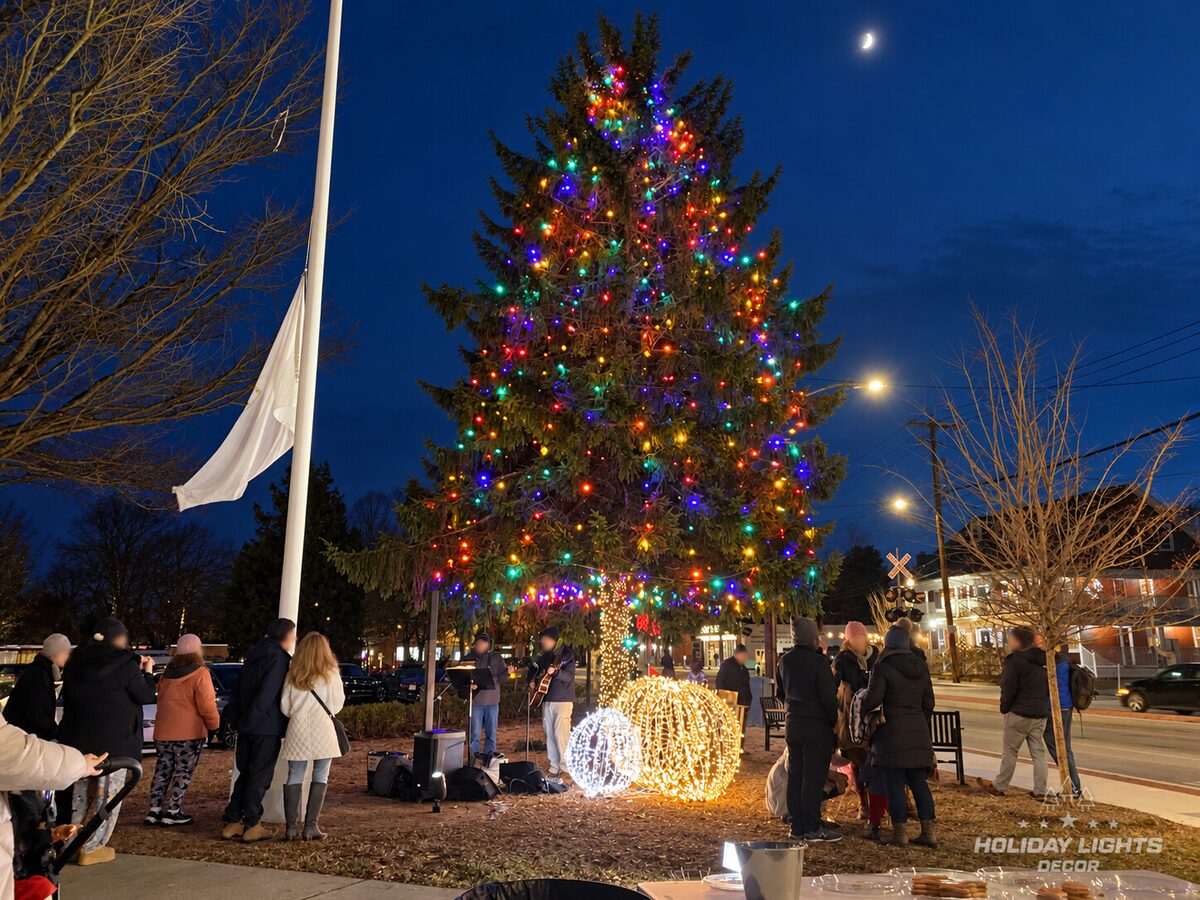
Municipal clients coordinating downtown corridor lighting for a town center face the same challenge at larger scale. Permit lead times, utility coordination, and crew scheduling all require runway that July provides and October does not. Municipal holiday lighting services in Massachusetts are among the earliest to book each year, precisely because city and town managers have learned this lesson the hard way.
Commercial clients who book in July also have the best opportunity to discuss permanent LED lighting systems that serve the property year-round—a growing trend among Massachusetts restaurants, hotels, and hospitality venues that want architectural lighting for every season, not just December.
Comparing July Booking vs. Fall Booking: A Side-by-Side Look
| Factor | July Booking | October/November Booking |
|---|---|---|
| Install Date Choice | Full calendar availability | Limited to remaining open slots |
| Pricing | Locked at booking date | Subject to fall material increases |
| Design Consultation | Unhurried, thorough, revisable | Compressed, time-pressured |
| C9 Bulb & Garland Availability | Full color/style selection | Popular styles may be allocated |
| Mid-Season Service Priority | High—established client | Lower—booked last |
| Stress Level | Low—handled before the rush | High—competing with dozens of others |
Choosing Your Palette Now: Warm White, Multicolor, or Both
One of the most enjoyable parts of a July consultation is choosing your color story without pressure. The two most popular choices among Massachusetts homeowners remain warm white and multicolor, and both have strong cases depending on your home's architecture and neighborhood character.
Warm white C9 bulbs along a roofline give a classic, elegant appearance that photographs beautifully against New England snow and reads as sophisticated from the street. Warm white garland draped across porch railings and door surrounds feels timeless—like every Hallmark movie set in a fictional Massachusetts town actually filmed in your driveway. It's also the dominant choice for warm-weather event lighting in Massachusetts, which means it works across multiple seasons if you invest in a permanent system.
Multicolor displays—classic C9 bulbs in red, green, blue, orange, and yellow—have seen a strong resurgence across Massachusetts neighborhoods, particularly on larger homes with generous front yards where the color drama can be fully appreciated. The key is intentional placement: multicolor C9s on the roofline, warm white wrapped trees in the yard, and lit garland in warm white at the entry creates a layered display that feels festive without being chaotic. Curious about what color palettes are trending? Our post on popular Christmas light colors heading into 2026 covers exactly that.
July is also the right time to look at your existing lights honestly. If your current C9 strand has dead sockets, faded bulbs, or a mismatched warm-white and cool-white mix from replacing individual bulbs over the years, now is the moment to plan an upgrade—not on November 15th when everyone else is making the same realization.
Frequently Asked Questions
Is it really worth booking holiday lights in July in Massachusetts?
Yes—booking in July is genuinely the most strategic move a Massachusetts homeowner can make for holiday lighting. Most reputable installers fill their November calendars between June and September, so July clients choose from the full range of available dates, lock in current pricing on materials like C9 bulbs and garland, and receive thorough design consultations that late-season callers simply don't have time for. The savings in both money and stress are real and consistent year after year.
How much can I save by booking holiday lights early in Massachusetts?
Early booking savings vary by project size, but homeowners typically save $150–$500 on a standard residential job by avoiding fall material price increases and accessing early-booking pricing holds. Beyond direct dollar savings, early clients avoid the hidden cost of a rushed install that misses design details—which can mean paying for a mid-season revision visit. For perspective on full project costs, our guide on Christmas light installation costs in Massachusetts provides detailed breakmarks by home size.
What information do I need to get an accurate holiday lighting quote in July?
To get an accurate early-season quote, gather your home's linear roofline footage (measure each eave and rake edge separately), note your roof pitch (low-slope under 5:12 vs. steep over 7:12), count the trees you want wrapped with their approximate heights, and decide which additional areas—porch columns, fence lines, window frames—you want lit. With that information, most Massachusetts installers can provide a firm written quote without requiring an in-person visit first.
Do commercial properties benefit from July booking as much as residential?
Commercial properties benefit even more from July booking. Multi-unit retail properties, restaurant groups, and office campuses typically require multi-day installations coordinated around business hours, which demand early calendar claiming. Municipal clients coordinating town-wide light displays face permit and utility lead times that make July booking essential rather than optional. Learn more about what's available through our commercial holiday lighting services in Massachusetts.
Can I change my design after booking in July?
Yes—most Massachusetts holiday lighting companies allow design adjustments up to a specified cutoff date (typically four to six weeks before your install date) without penalty. Booking early actually gives you more flexibility to refine your design over the summer, not less. You can start with a basic roofline C9 plan in July and add garland swags, tree wrapping, or a permanent lighting upgrade by September with plenty of time for the crew to accommodate the revised scope.
What types of lights should I consider for a Massachusetts home?
For Massachusetts homes, commercial-grade LED C9 bulbs along the roofline are the top professional recommendation—they're rated for harsh New England winters, draw far less power than incandescent versions, and maintain consistent color through the season. Warm white is the most popular roofline choice, with multicolor C9s close behind for homeowners who want a traditional, vibrant look. Garland in lit or unlit versions adds dimension to entryways and porch railings. For a deeper look at product types, our post on what types of lights professionals use covers the full range of commercial-grade options.
Ready to get ahead of the Massachusetts holiday lighting rush? Contact us today for a free early-season estimate—our July clients get priority scheduling, locked-in pricing, and a design consultation that makes every December exactly what you envisioned back in July.