The first nor'easter of the season dumps eight inches of snow across Greater Boston, and while homeowners scramble to clear driveways, the professional Christmas lights Massachusetts installation on the colonial down the street continues to glow flawlessly. No flickering. No burnt-out sections. No tangled mess of extension cords buried under the snow.
This isn't luck—it's the difference between consumer-grade holiday lights and the commercial-grade systems that professional installers like Holiday Lights Decor Massachusetts have used since 2006. After nearly two decades of installing holiday lighting across the North Shore, MetroWest, and Greater Boston, we've learned exactly which products can handle Massachusetts weather and which ones leave clients frustrated by Thanksgiving weekend.
Commercial-Grade C9 LED Bulbs: The Professional Standard
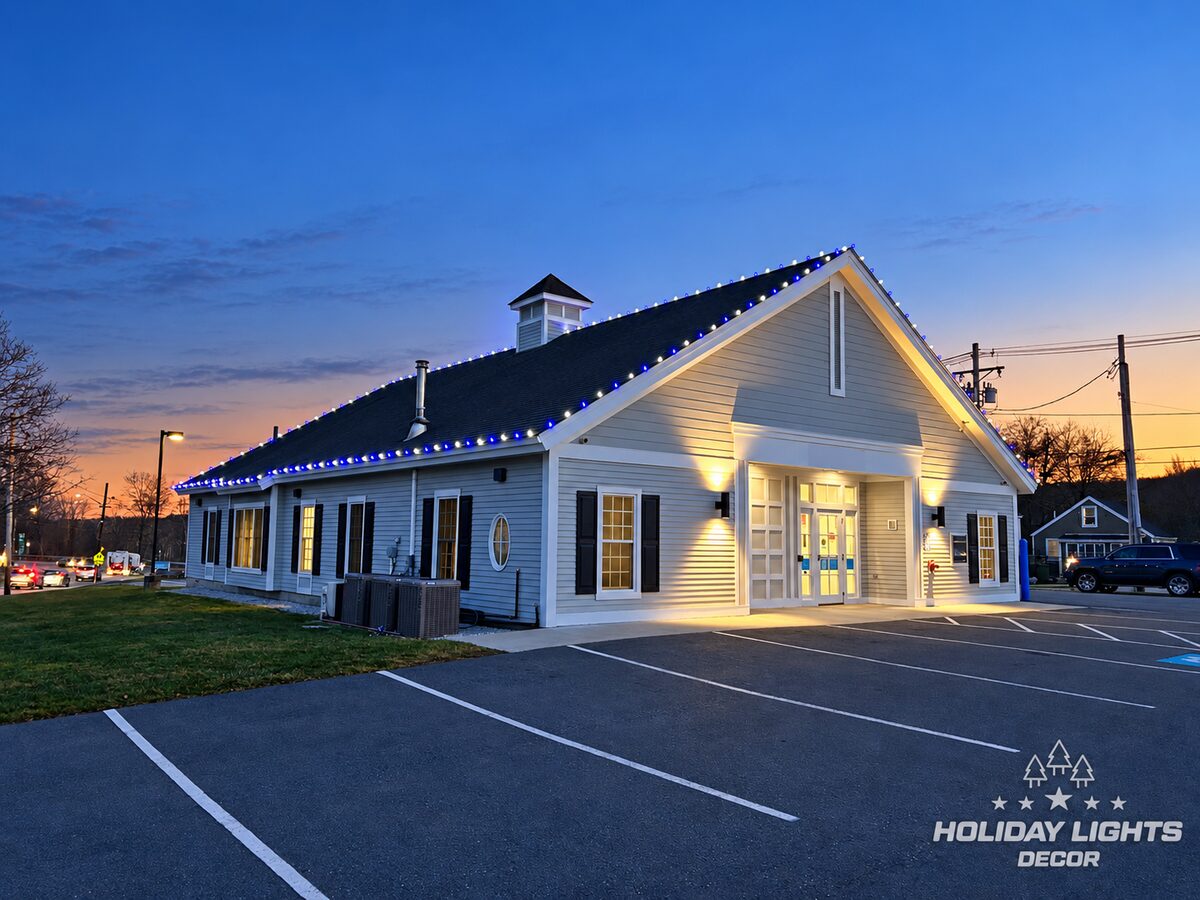
Walk through any upscale neighborhood in Wellesley, Lexington, or Marblehead during the holidays, and you'll notice something immediately: the rooflines aren't decorated with the small, delicate lights found at big box stores. Professional installers across Massachusetts rely heavily on C9 LED bulbs—the large, classic Christmas bulbs that create that iconic American holiday look.
C9 bulbs measure approximately 1.25 inches in diameter and 2.5 inches in length, making them visible from the street even on the largest colonial and Victorian homes common throughout New England. But size isn't the only reason professionals choose C9s. These bulbs are engineered with thicker plastic construction and reinforced bases that can withstand the freeze-thaw cycles that define Massachusetts winters.
Professional-grade C9 LED bulbs typically feature:
- Polycarbonate construction rated for temperatures down to -20°F
- Sealed LED diodes that won't fail from moisture infiltration
- Faceted lens design that creates superior light dispersion
- Commercial UL listing for outdoor use
- 5-year manufacturer warranties standard
In warm white and cool white configurations, C9 LEDs provide the elegant, sophisticated look that complements both traditional New England architecture and modern contemporary homes throughout the Commonwealth.
C7 Bulbs for Detailed Professional Christmas Lights Massachusetts Applications
While C9 bulbs handle rooflines and major architectural features, professional installers turn to C7 bulbs for more detailed work. At about 1 inch in diameter, C7s are perfect for wrapping columns, outlining windows, or highlighting the intricate trim work found on many historic Massachusetts homes.
C7 LEDs offer the same commercial-grade construction as their larger C9 counterparts but in a more proportionate size for smaller applications. Professional installers often use C7 cool white LEDs to outline doorways and windows on commercial properties throughout downtown areas like Harvard Square, Faneuil Hall, or the historic districts of Salem and Concord.
The key advantage of professional C7 systems lies in their spacing consistency. Commercial-grade C7 strings maintain exact 12-inch spacing between bulbs, creating perfectly uniform lines that amateur installations simply can't achieve with consumer products.
Heavy-Duty Wiring Systems Built for New England Weather
Perhaps the most critical difference between consumer and professional Christmas lights isn't the bulbs themselves—it's the wiring that connects them. Professional Christmas lights Massachusetts installers use commercial-grade wire and cord sets specifically designed for outdoor use in harsh climates.
Standard consumer Christmas lights use 22-gauge wire, which is adequate for indoor use but inadequate for the voltage drops that occur over long runs on large homes. Professional systems use 18-gauge or even 16-gauge wire, which maintains consistent voltage delivery across 100-foot runs or longer.
Commercial-grade wiring features several critical upgrades:
- SPT-2 jacketing: Heavy-duty rubber insulation that remains flexible in sub-zero temperatures
- Molded sockets: Each bulb socket is molded directly to the wire rather than crimped, preventing moisture infiltration
- Reinforced end caps: Professional plugs and sockets use locking mechanisms that prevent accidental disconnection
- SJTW rating: This UL designation indicates the cord is rated for outdoor use in severe weather conditions
When February brings those brutal wind storms off the Atlantic that can knock out power across the Cape and islands, professional wiring systems continue operating because they're engineered for exactly these conditions.
Professional-Grade Connectors and Power Distribution
Consumer Christmas lights rely on simple male-and-female plug connections that work fine for small applications but create failure points on larger installations. Professional installers use weatherproof connector systems that seal completely against moisture infiltration.
Commercial-grade connectors feature:
- Twist-lock mechanisms that prevent accidental disconnection
- Rubber gasket seals rated for submersion
- Corrosion-resistant contacts that maintain conductivity over multiple seasons
- Strain relief that prevents wire damage at connection points
For power distribution, professionals never daisy-chain multiple extension cords like homeowners typically do. Instead, they use dedicated electrical distribution boxes with GFCI protection at the source, then run appropriately-rated extension cords to strategic points throughout the installation.
This approach not only ensures safety and code compliance but also maintains consistent voltage throughout the entire system. When you see a professional installation in Newton or Brookline where every bulb glows with identical intensity from the first to the last, it's because the power distribution system is properly engineered.
Why Professionals Choose LED Over Incandescent
While some homeowners still prefer the warm glow of incandescent C9 bulbs, professional Christmas lights Massachusetts installations have largely shifted to LED technology for practical reasons that benefit both installers and clients.
LED advantages in professional applications include:
- Energy efficiency: LED C9 bulbs consume 90% less electricity than incandescent equivalents
- Heat generation: LEDs remain cool to the touch, reducing fire risk and preventing snow melt that can create ice dams
- Lifespan: Quality LED bulbs last 25,000+ hours compared to 1,000-3,000 hours for incandescent
- Durability: LED diodes are solid-state and resist shock damage during installation and maintenance
- Color consistency: LED bulbs maintain consistent color temperature throughout their lifespan
For commercial clients especially, the energy savings of LED systems often pay for the installation within two to three seasons. A typical retail storefront in downtown Newburyport or Portsmouth might reduce their December electrical costs by $200-400 monthly simply by switching from incandescent to professional LED systems.
Warm White vs. Cool White: Professional Color Selection
Professional installers typically recommend either warm white or cool white LED configurations rather than multicolor displays for most residential and commercial applications. This choice reflects both aesthetic preferences and practical considerations.
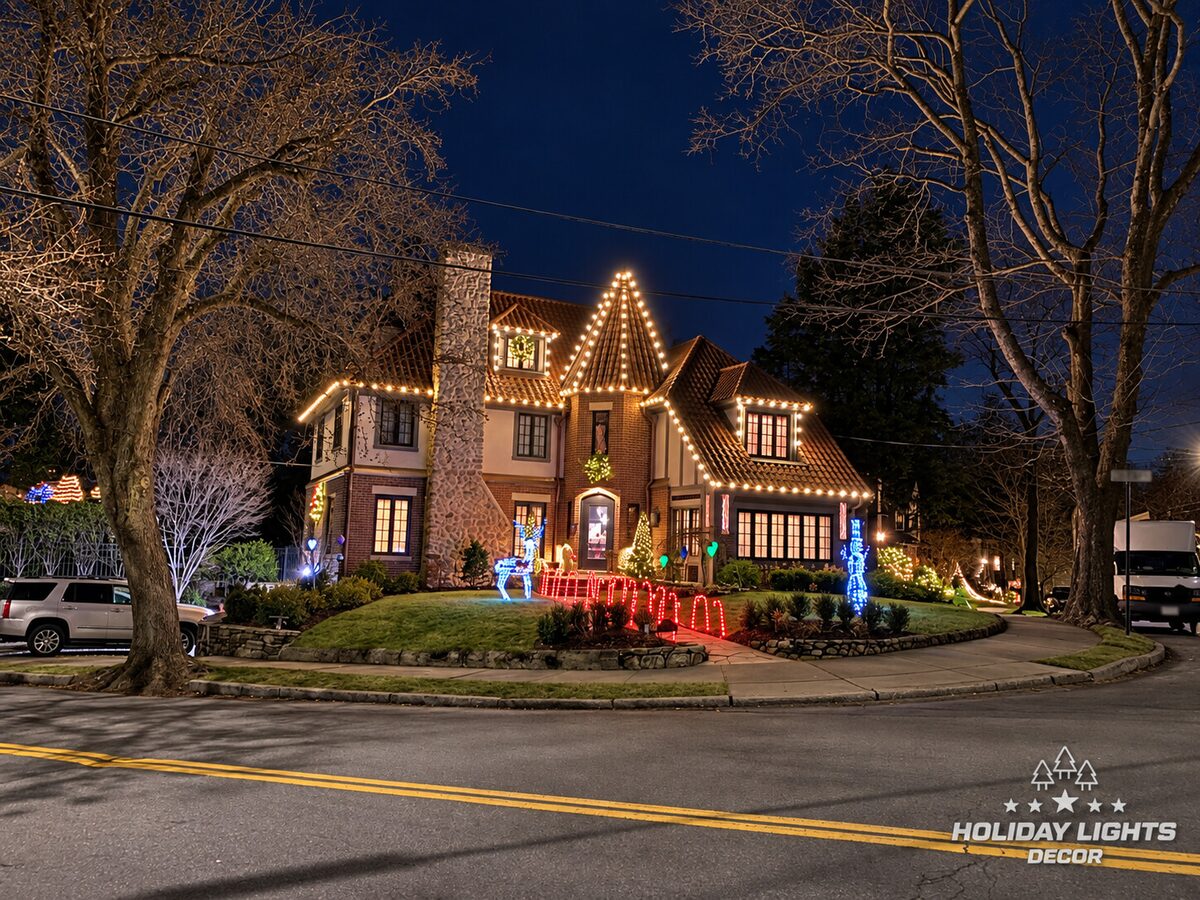
Warm white LEDs (2700K-3000K color temperature) create the cozy, inviting atmosphere that complements traditional New England architecture. These work particularly well on colonial homes, Tudor revivals, and other classic styles common throughout suburbs like Concord, Sudbury, and Weston.
Cool white LEDs (5000K-6500K color temperature) provide a crisp, modern appearance that suits contemporary architecture and commercial applications. Downtown business districts often prefer cool white because it coordinates well with existing streetscape lighting and creates a sophisticated, upscale appearance.
Professional installers rarely mix warm and cool white in the same installation, as the color temperature difference becomes jarring rather than complementary. Instead, they might use warm white C9s on the roofline with warm white C7s for detail work, maintaining color consistency throughout the entire design.
Professional Installation Techniques That Make the Difference
The quality of professional Christmas lights Massachusetts installations isn't just about premium products—it's also about installation techniques that ensure long-term performance and visual appeal.
Professional installers use specialized clips and mounting hardware designed specifically for different architectural elements. Rather than stapling lights directly to wood or using generic clips, they select from dozens of different clip styles designed for gutters, shingles, brick, vinyl siding, and other materials.
Proper spacing is another hallmark of professional work. C9 roofline installations typically maintain 12-inch centers, which creates the ideal balance between coverage and economy. Tighter spacing looks cluttered; wider spacing creates gaps that diminish the visual impact.
For businesses and municipal clients, professional installers coordinate with local electrical codes and obtain necessary permits. This might seem like administrative overhead, but it protects both the property owner and the installer from liability issues that can arise from improper electrical work.
Maintenance and Storage of Professional Systems
One often-overlooked advantage of professional-grade lights is their serviceability. When a section goes dark on a consumer light string, the entire string typically needs replacement. Professional C9 and C7 systems use individual replaceable bulbs, so maintenance involves simply identifying and replacing the failed component.
Professional installers also handle proper storage during the off-season. LED bulbs and commercial wiring can last decades when properly maintained, but improper storage in hot attics or damp basements will dramatically reduce lifespan. Companies like Holiday Lights Decor Massachusetts often include storage as part of their service package, ensuring that the investment in quality equipment pays dividends over many seasons.
Cost Considerations: Professional vs. Consumer Systems
While professional-grade Christmas lights represent a significantly higher upfront investment than consumer alternatives, the total cost of ownership often favors the professional approach. A quality C9 LED system might cost three to four times more initially than big box store lights, but the professional system will likely outlast five to ten consumer replacements.
For residential clients, many professional installers offer lease programs where the customer pays an annual fee that covers installation, maintenance, storage, and equipment. This approach provides the benefits of professional-grade lighting without the large upfront investment.
Commercial clients often find that professional systems pay for themselves through energy savings alone, even before considering the reduced labor costs of not having to replace failed sections multiple times per season.
Choosing Professional Installation in Massachusetts
When selecting a professional Christmas lights Massachusetts installer, look for companies that can specify exactly which products they use and why. Reputable installers will gladly discuss wire gauges, UL listings, and warranty terms because these details differentiate their service from amateur competition.
Ask about their approach to power distribution and electrical safety. Professional installers should be able to calculate electrical loads and ensure that your home's electrical system can safely handle the additional demand. They should also carry appropriate insurance and be able to provide references from recent installations in your area.
The best time to engage a professional installer is early fall, before the installation season begins in earnest. This allows time for design consultations, electrical assessments, and scheduling that accommodates your preferences rather than rushing to meet holiday deadlines.
Quality professional Christmas lights can transform your Massachusetts property into a holiday showcase that enhances both your enjoyment and your property value. Whether you're considering a residential installation for your family home or a commercial display for your business, investing in professional-grade equipment and installation ensures years of reliable, beautiful holiday lighting.
Frequently Asked Questions
What's the difference between C9 and C7 Christmas lights?
C9 bulbs are larger (1.25 inches diameter) and are typically used for rooflines and major architectural features, while C7 bulbs are smaller (1 inch diameter) and better suited for detailed work like window outlines and column wrapping. Both are available in professional-grade LED versions with commercial UL listings.
How long do professional LED Christmas lights last?
Quality professional LED Christmas lights typically last 25,000 to 50,000 hours, which translates to 15-25 years of normal holiday use. The commercial-grade wiring and connectors can last even longer with proper maintenance and storage.
Are professional Christmas lights worth the extra cost in Massachusetts?
Yes, especially given Massachusetts' harsh winter weather. Professional-grade lights are engineered to withstand freeze-thaw cycles, ice storms, and nor'easters that quickly destroy consumer-grade products. The energy efficiency of professional LED systems also provides ongoing savings that help offset the higher initial cost.
Can professional Christmas lights handle Massachusetts snow and ice?
Professional Christmas lights are specifically designed for harsh outdoor conditions. They use weather-resistant materials, sealed connections, and low-heat LED technology that prevents snow melt and ice dam formation. The heavy-duty wiring remains flexible even in sub-zero temperatures common across Massachusetts winters.
When should I schedule professional Christmas light installation in Massachusetts?
Professional installers typically begin installations in early November and complete most projects before Thanksgiving. To ensure availability and preferred timing, it's best to schedule consultations in September or early October, especially for larger residential or commercial projects.