Every December, as Massachusetts homeowners watch their neighbors' Christmas displays flicker and fail during the first nor'easter, a familiar question emerges: are commercial grade Christmas lights worth the extra investment? The answer might surprise you — especially when you factor in our harsh New England winters.
When determining if commercial grade christmas lights worth it for your Massachusetts home, the math is compelling. While retail store lights might cost $15-30 per strand, commercial grade LED strings run $40-80 per strand. But here's what changes the equation entirely: those cheap lights last 1-2 seasons, while commercial grade C9 LED bulbs and professional-grade mini lights deliver 5-7 seasons of reliable performance.
The Real Cost Difference: Per Season vs Per Year Analysis
Let's break down the actual numbers for a typical Greater Boston colonial home requiring 15 strands of lights for full roofline coverage:
Retail Store Route:
- Cost: $450 every 1-2 seasons ($300-450 annually)
- Installation time: 8-12 hours annually
- Frustration factor: High (tangled lights, dead sections, safety concerns)
- Performance in Massachusetts weather: Poor to moderate
Commercial Grade Investment:
- Initial cost: $900-1,200 (lasting 5-7 seasons)
- Annual cost: $128-240 per year
- Installation time: 4-6 hours (easier connections, fewer failures)
- Frustration factor: Low
- Performance in Massachusetts weather: Excellent
The commercial grade option saves $72-210 annually while delivering superior performance. Over five seasons, that's $360-1,050 in savings — plus countless hours of your time.
Why Massachusetts Weather Demands Commercial Grade Quality
Massachusetts winters test Christmas lights like nowhere else. From MetroWest ice storms to coastal wind gusts exceeding 60 mph, our climate destroys inferior lighting systems. Commercial grade christmas lights worth it becomes obvious when you consider our unique challenges:
Ice Storm Survival: Commercial grade lights feature thicker wire insulation and reinforced connections that withstand ice accumulation. Retail lights often fail when ice weighs down connections or creates short circuits.
Temperature Cycling: Massachusetts experiences dramatic temperature swings — from 15°F January nights to 45°F February afternoons. This expansion and contraction cracks cheap light sockets but barely affects commercial grade components.
UV Resistance: Even winter sun damages low-quality plastics. Commercial grade lights use UV-stabilized materials that maintain color and flexibility through multiple seasons.
Professional installers across Massachusetts report that commercial installations experience 90% fewer service calls compared to retail light projects. That reliability becomes invaluable during busy holiday seasons.
ROI Analysis: Homeowners vs Business Applications
Residential ROI in Massachusetts:
For homeowners, commercial grade christmas lights worth it calculation includes more than just purchase price. Consider a typical North Shore home:
- Energy savings: LED commercial lights use 80% less electricity than incandescent
- Replacement costs avoided: $300-450 every other year
- Time savings: 6-8 hours annually not spent replacing failed sections
- Safety benefits: Fewer ladder trips, reduced fire risk
- Property value: Professional lighting increases curb appeal
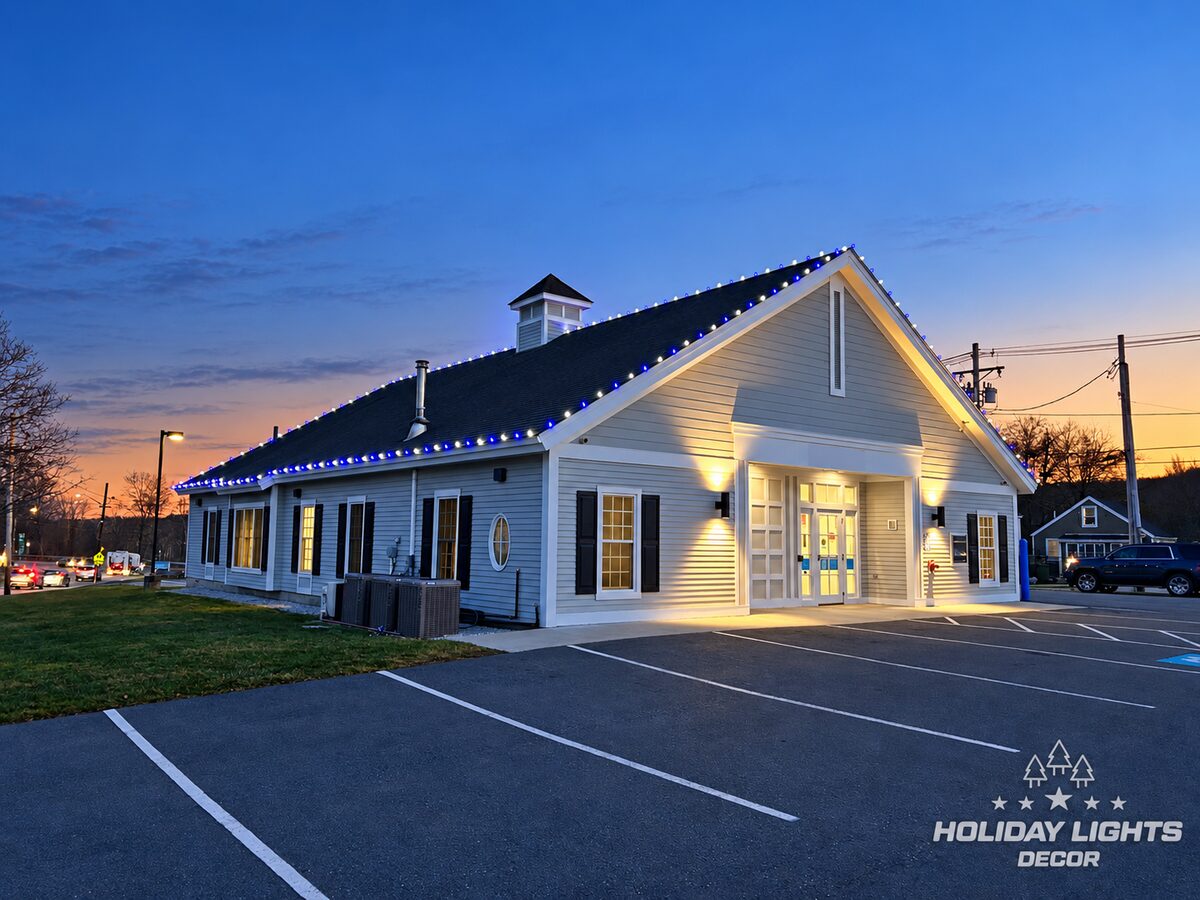
Many residential clients report that commercial grade warm white C9 LED bulbs on their roofline become a neighborhood talking point, adding perceived value to their property.
Commercial Property ROI:
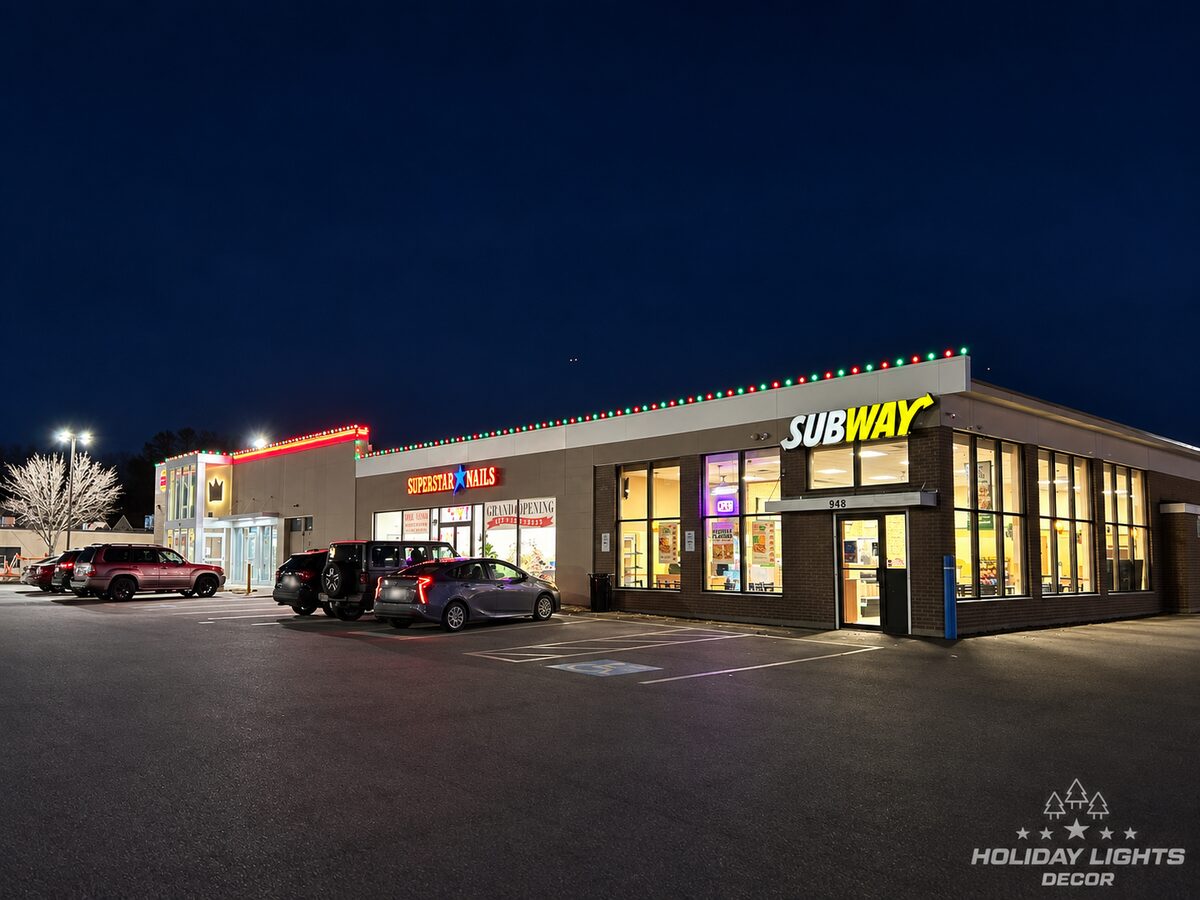
For businesses, the calculation becomes even more compelling. A MetroWest shopping center or Greater Boston office building can't afford lighting failures during peak customer seasons. Commercial grade systems offer:
- 99% uptime reliability
- Reduced maintenance calls during business hours
- Professional appearance that builds brand confidence
- Energy efficiency that reduces operating costs
- Warranty coverage that protects investment
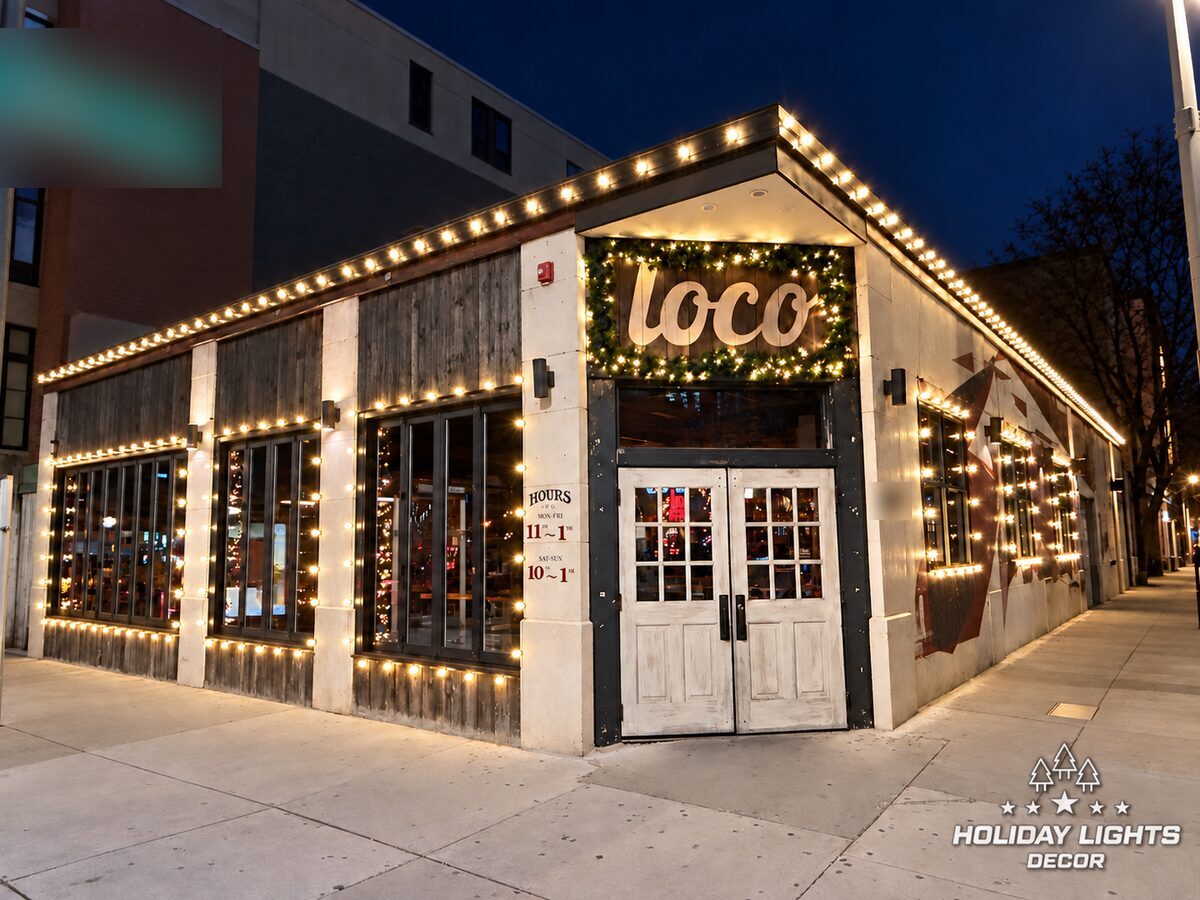
Restaurant owners in downtown areas report that reliable cool white commercial lighting increases evening foot traffic by 15-25% during holiday seasons.
What Makes Commercial Grade Lights Actually "Commercial Grade"
Not all expensive lights qualify as truly commercial grade. Here's what separates professional systems from premium retail options:
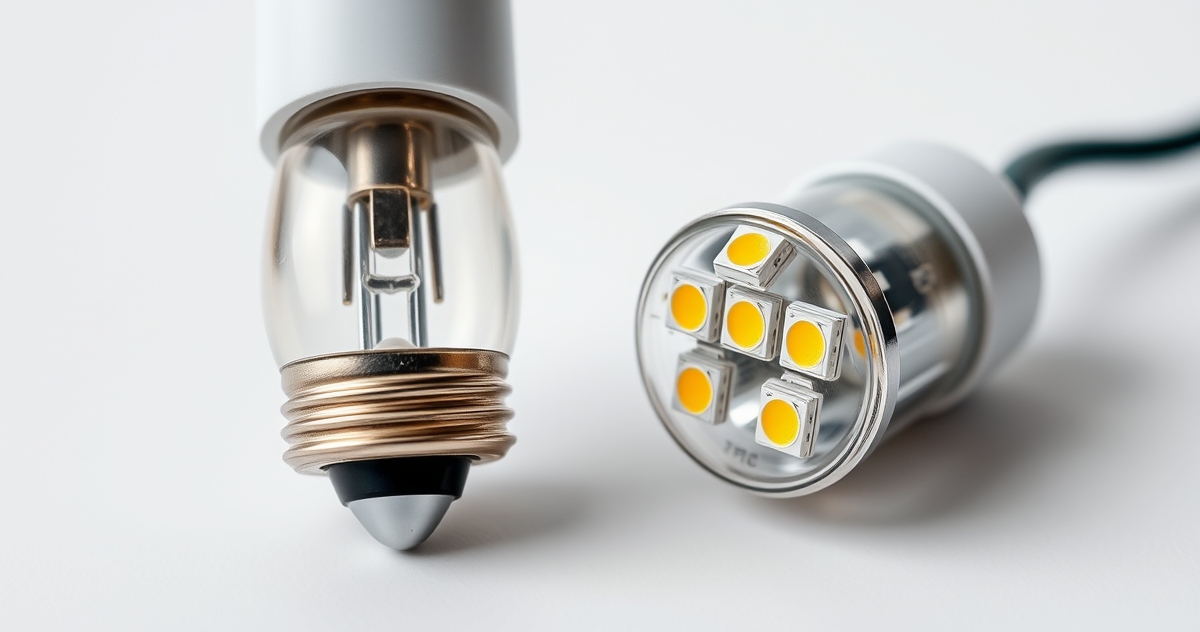
Wire Gauge: Commercial lights use 18 or 16 AWG wire versus 20-22 AWG in retail products. Thicker wire handles power loads better and resists damage.
Socket Construction: Molded sockets with gasket seals prevent moisture infiltration. Retail lights often use twist-on sockets that loosen over time.
LED Quality: Commercial LEDs use bin-matched diodes for consistent color temperature. Retail LEDs often show color variation within the same strand.
Connection Systems: Male-female plug connections feature locking mechanisms and weather seals. Retail connections rely on friction fit that fails in wind.
Certification: UL Listed for commercial applications, not just consumer use. This matters for insurance and building code compliance.
Making the Investment Work: Installation and Maintenance Tips
Even commercial grade lights need proper installation to deliver their full value. Massachusetts conditions demand attention to:
Proper Spacing: C9 bulbs should be spaced 12 inches on center for rooflines, 6-8 inches for detailed work. This prevents voltage drop and ensures even illumination.
Secure Mounting: Use professional-grade clips designed for your roof material. Cheap clips fail in wind, damaging both lights and roof.
GFCI Protection: All outdoor lighting requires ground fault protection. Commercial installations include dedicated GFCI outlets for reliability.
Timer Controls: Programmable timers prevent unnecessary runtime while ensuring lights activate reliably each evening.
Professional installation typically adds 15-25% to total project cost but ensures maximum return on your commercial grade investment. Many homeowners find that professional installation pays for itself through proper setup and reduced maintenance needs.
Frequently Asked Questions
How long do commercial grade Christmas lights actually last in Massachusetts weather?
Commercial grade LED Christmas lights typically last 5-7 seasons in Massachusetts conditions, compared to 1-2 seasons for retail lights. The exact lifespan depends on installation quality and exposure to severe weather, but most professional installers warranty their commercial grade systems for at least 3 seasons.
Can I buy commercial grade Christmas lights at regular stores?
True commercial grade Christmas lights are rarely available at retail stores. Most "commercial style" lights sold at big box stores use consumer-grade components with commercial styling. Professional lighting contractors source genuine commercial products from specialized distributors.
Are commercial grade Christmas lights worth it for small homes?
Even small Massachusetts homes benefit from commercial grade lights. A modest cape requiring 8-10 strands still saves $200-400 over five seasons while eliminating the annual frustration of light replacement. The time and safety benefits often justify the investment regardless of home size.
Do commercial grade lights use more electricity than regular Christmas lights?
Commercial grade LED lights actually use 80% less electricity than traditional incandescent Christmas lights. While they cost more initially, the energy savings in Massachusetts (where electricity runs $0.22-0.28 per kWh) add up quickly. A typical home display saves $50-80 annually in electricity costs alone.
What's the difference between warm white and cool white commercial grade lights?
Warm white commercial LEDs (2700K-3000K) provide a cozy, traditional look that complements most Massachusetts home styles. Cool white LEDs (4000K-6500K) offer a crisp, modern appearance popular for commercial buildings and contemporary homes. Both options deliver the same longevity and energy efficiency.
When Massachusetts homeowners and businesses weigh whether commercial grade christmas lights worth it, the answer consistently points toward long-term value. Between our challenging weather, energy costs, and the time investment required for annual light replacement, commercial grade systems deliver measurable returns within 2-3 seasons.
Ready to explore commercial grade lighting options for your Massachusetts property? Our team provides free consultations to help you understand the investment and potential returns for your specific situation. Contact Holiday Lights Decor Massachusetts at (781) 778-8086 to schedule your assessment and discover how commercial grade lighting can transform your holiday display while protecting your investment for years to come.