What's the Difference Between LED and Incandescent Christmas Lights?
Every year, Massachusetts homeowners face the same question when pulling out their holiday lighting boxes: should you stick with traditional incandescent bulbs or make the switch to LED? Understanding the difference between LED and regular Christmas lights goes beyond just energy bills — it affects how your display looks, how long your lights last, and how much time you spend troubleshooting mid-December.
After installing thousands of Christmas light displays across Greater Boston, Middlesex County, and Southern NH, our team at Holiday Lights Decor MA has seen both technologies up close. Here's everything you need to know to make the right call.
LED vs Incandescent Christmas Lights: The Core Difference
The fundamental difference between incandescent and LED Christmas lights comes down to how each bulb produces light. Incandescent Christmas lights work by passing electricity through a thin tungsten filament. The filament heats up to roughly 4,600°F and glows — reliable, warm, and familiar, but inherently wasteful: about 90% of the energy becomes heat, not light.
LED (Light-Emitting Diode) Christmas lights produce light through a semiconductor process called electroluminescence. When current flows through the diode, photons are released directly — no filament to heat up, no glass envelope to break, and dramatically less wasted energy. Whether you call them LED versus incandescent Christmas lights or simply compare regular Christmas lights vs LED, the physics are the same.
How Can You Tell If Christmas Lights Are LED?
If you're unsure what type of lights you're working with, here are the fastest ways to know how to tell LED vs incandescent Christmas lights apart:
- Touch test (after 10 minutes of use): Incandescent bulbs feel noticeably warm or hot. LED bulbs stay close to room temperature. This is the quickest real-world way to tell LED vs non-LED Christmas lights apart.
- Look at the bulb: LED bulbs have a small plastic or epoxy dome. Incandescent bulbs have a glass globe over a visible metal filament.
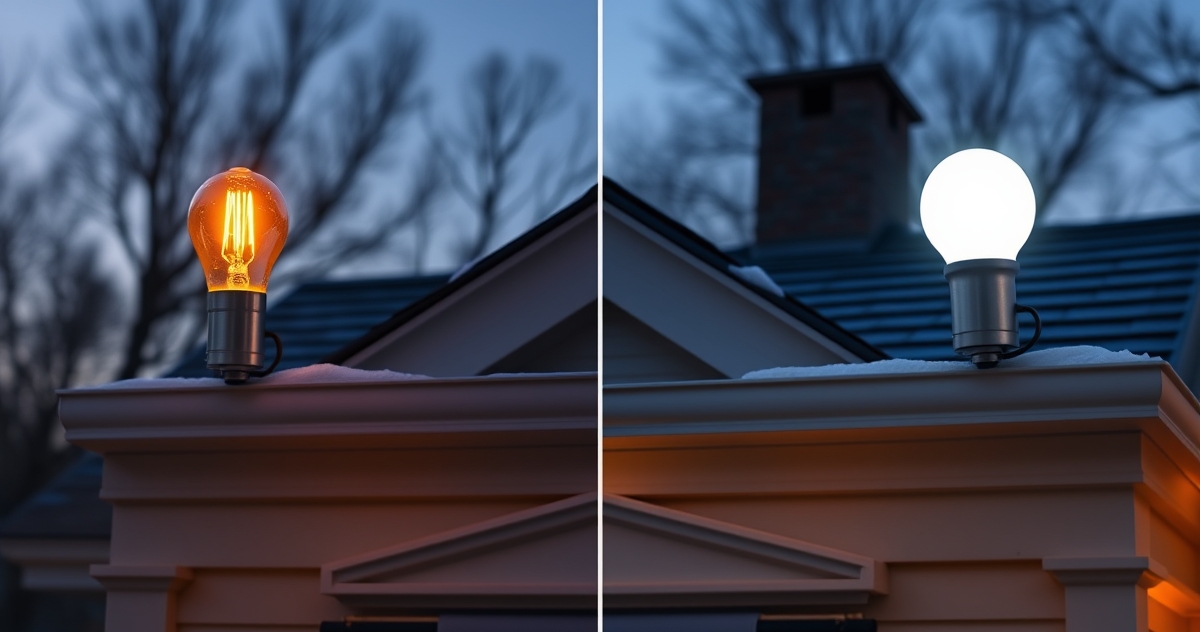
- Color of the light: Traditional incandescent Christmas lights produce a warm amber-yellow glow (around 2,700K). Most LED vs regular Christmas lights appear slightly cooler or crisper, though warm-white LED options now match incandescent color very closely.
- Check the packaging or tag: Any light set manufactured since 2012 must label LED vs incandescent. Look for "LED" on the plug-end tag.
- Price: A $3 string of minis is almost certainly incandescent; a $12–18 string is likely LED.
LED vs Incandescent Christmas Lights: Energy & Cost Comparison
This is where the LED vs incandescent Christmas lights comparison gets concrete. A standard 100-bulb string of incandescent mini lights draws about 40 watts. The LED equivalent draws roughly 4–5 watts — a 90% reduction.
Run your display 6 hours a night for 45 days (Thanksgiving through New Year's in Massachusetts):
- Incandescent string (100 bulbs, 40W): 10.8 kWh per season → about $1.73 at MA's average 16¢/kWh
- LED string (100 bulbs, 4.8W): 1.3 kWh per season → about $0.21
For a modest display with 10 strings, that's $17.30 vs $2.10 per season. Most customers recover the cost difference between LED Christmas lights vs regular Christmas lights within two to three seasons.
C9 Incandescent vs LED: What You Need to Know
C9 bulbs — the large, faceted bulbs used for roofline and gutter runs — are where the C9 incandescent vs LED comparison becomes most dramatic. Traditional C9 incandescent bulbs draw 7 watts each. A 25-bulb run pulls 175 watts. The LED equivalent: about 1.5 watts per bulb, or 37.5 watts total.
More importantly for safety: C9 incandescent bulbs get extremely hot — enough to melt snow, refreeze as ice on walkways, and represent a genuine fire risk near dry foliage. C9 LED bulbs run cool to the touch. This is a meaningful difference for Greater Boston's historic wood-sided housing stock.
Warm White LED vs Incandescent Christmas Lights: Does It Look the Same?
The most common objection we hear: "I don't want that cold, blue-white LED look." It was a valid concern a decade ago. Today, quality warm white LED vs incandescent Christmas lights are visually indistinguishable to most people.
Standard incandescent Christmas lights produce light at approximately 2,700K — a warm, amber-tinged white. Modern warm-white LED strings match this closely at 2,700K–3,000K. Side-by-side on a roofline at dusk, the difference is negligible. The key is to buy warm-white LED with a diffused or frosted lens for the most natural light distribution.
Christmas Tree: LED vs Incandescent
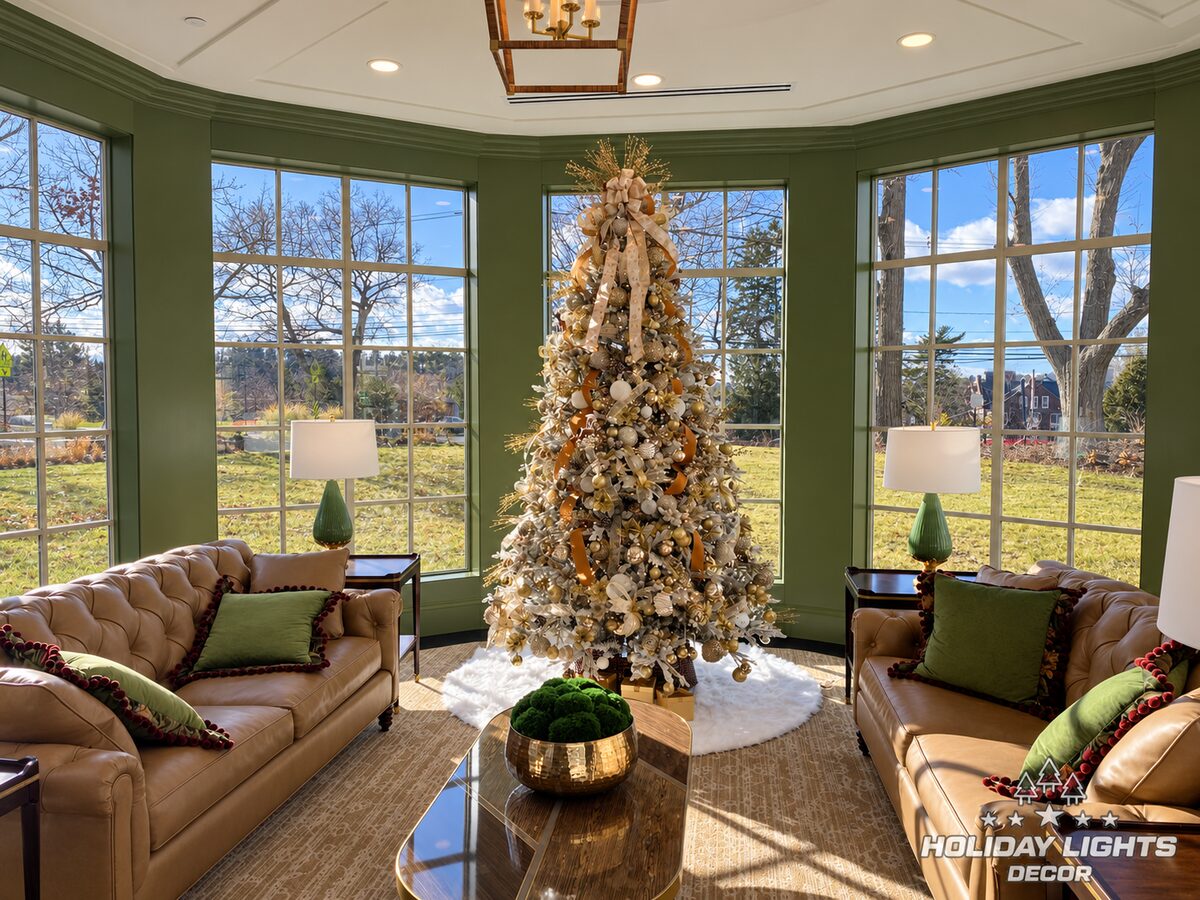
For Christmas tree LED vs incandescent comparisons, heat is an added factor. A tree with 600 incandescent mini lights radiates meaningful heat into the branches. On a fresh-cut tree, this accelerates moisture loss and increases fire risk. For artificial trees, it can warp branches.
LED lights produce so little heat that the incandescent vs LED Christmas tree comparison tilts decisively toward LED for indoor use. Many artificial tree manufacturers now require LED lights to protect their product warranty.
Comparing Christmas tree lights LED vs incandescent side by side, most homeowners find warm-white LED indistinguishable at normal viewing distance. Our recommendation for safety and longevity: LED vs regular Christmas tree lights is the clear choice.
Lifespan: How Long Do LED vs Incandescent Christmas Lights Last?
This is one of the most practical advantages when evaluating LED holiday lights vs incandescent. A standard incandescent string is rated for 1,500–3,000 hours. A quality LED string is rated for 25,000–50,000 hours. Under real holiday-season use (270 hours per season):
- Incandescent: 5–11 seasons before bulbs begin failing
- LED: 90–185 seasons (the wire and plug will fail before the LEDs do)
Incandescent Christmas lights vs LED durability is not a close comparison. When Holiday Lights Decor MA installs a display, we guarantee it looks identical year after year — that's only possible with commercial-grade LED strings.
Should You Switch? LED or Incandescent Christmas Lights for Your Home
The answer to LED or incandescent Christmas lights for most Massachusetts homeowners: LED is the better long-term choice. The energy savings, safety advantages, and longevity outweigh the higher upfront cost, especially amortized over multiple seasons.
Cases where incandescent may still make sense:
- You already own a large inventory of incandescent lights in good condition
- You specifically prefer incandescent glow for interior tree aesthetics
- Budget constraints make the upfront LED premium prohibitive this season
If you're starting fresh or replacing a failing display, go LED. Every installation Holiday Lights Decor MA performs uses commercial-grade LED strings — they perform reliably, draw less power, and last.
Frequently Asked Questions
Are LED Christmas lights brighter than incandescent?
At equivalent lumen output, yes — LED produces more lumens per watt. However, many LED strings are designed to match standard incandescent brightness rather than exceed it, so the brightness you see is a design choice.
Do LED Christmas lights work in cold weather?
Better than incandescent, actually. LED efficiency increases slightly in cold temperatures. For Massachusetts winters with temperatures well below freezing, LED strings are more reliable than incandescent.
What are incandescent Christmas lights?
Incandescent Christmas lights are the traditional bulb type used for holiday decorating since the early 20th century. They heat a tungsten filament with electric current until it glows — warm and familiar, but significantly less efficient and hotter than LED alternatives.
How do I know if my Christmas lights are LED or incandescent?
Plug them in for 10–15 minutes, then carefully touch a bulb. Warm or hot = incandescent. Cool to the touch = LED. You can also look for a visible filament inside the glass (incandescent) versus a solid dome with no filament (LED).
Can I mix LED and incandescent Christmas lights?
Yes, they're compatible on the same circuit. Don't mix bulb types within the same string, as the current draw differences can cause premature LED failure.
Professional Holiday Lighting in Massachusetts: LED Is Our Standard
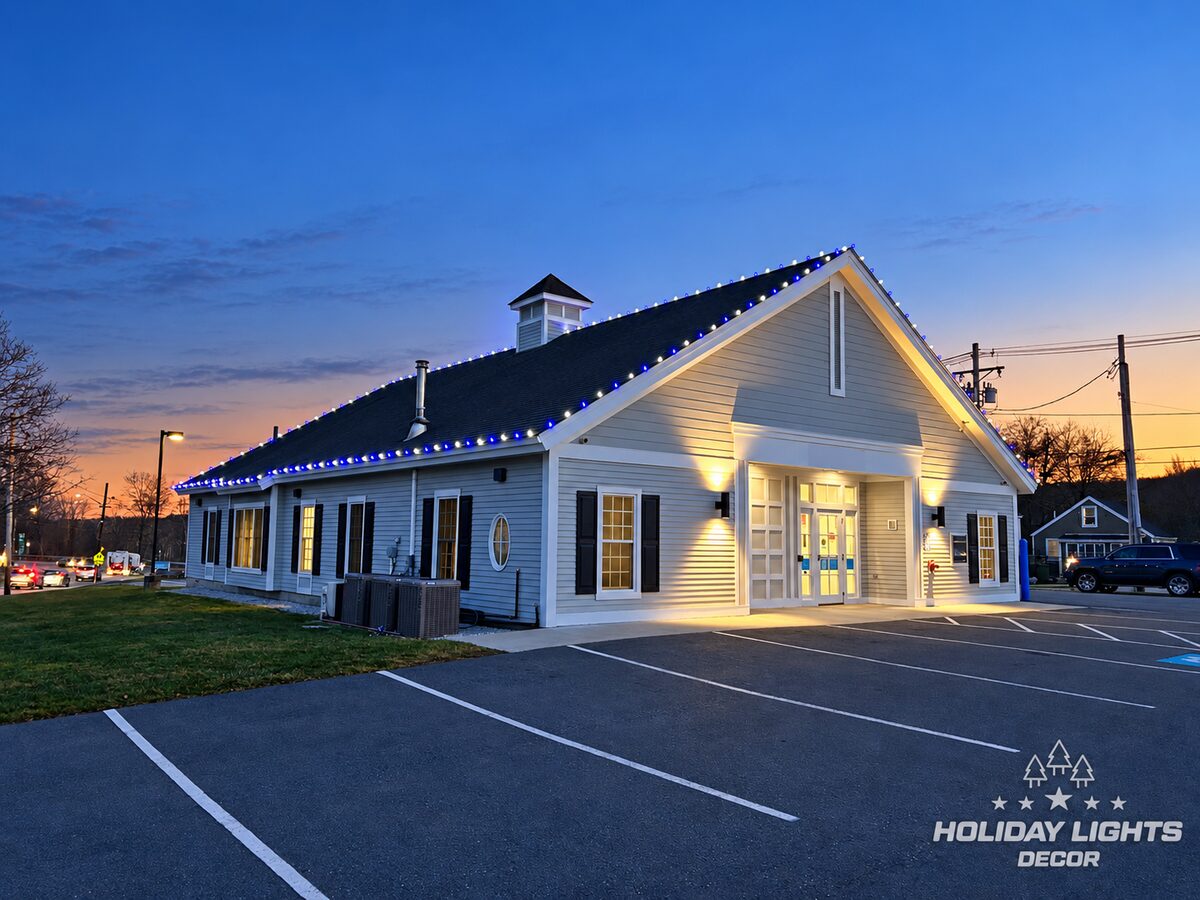
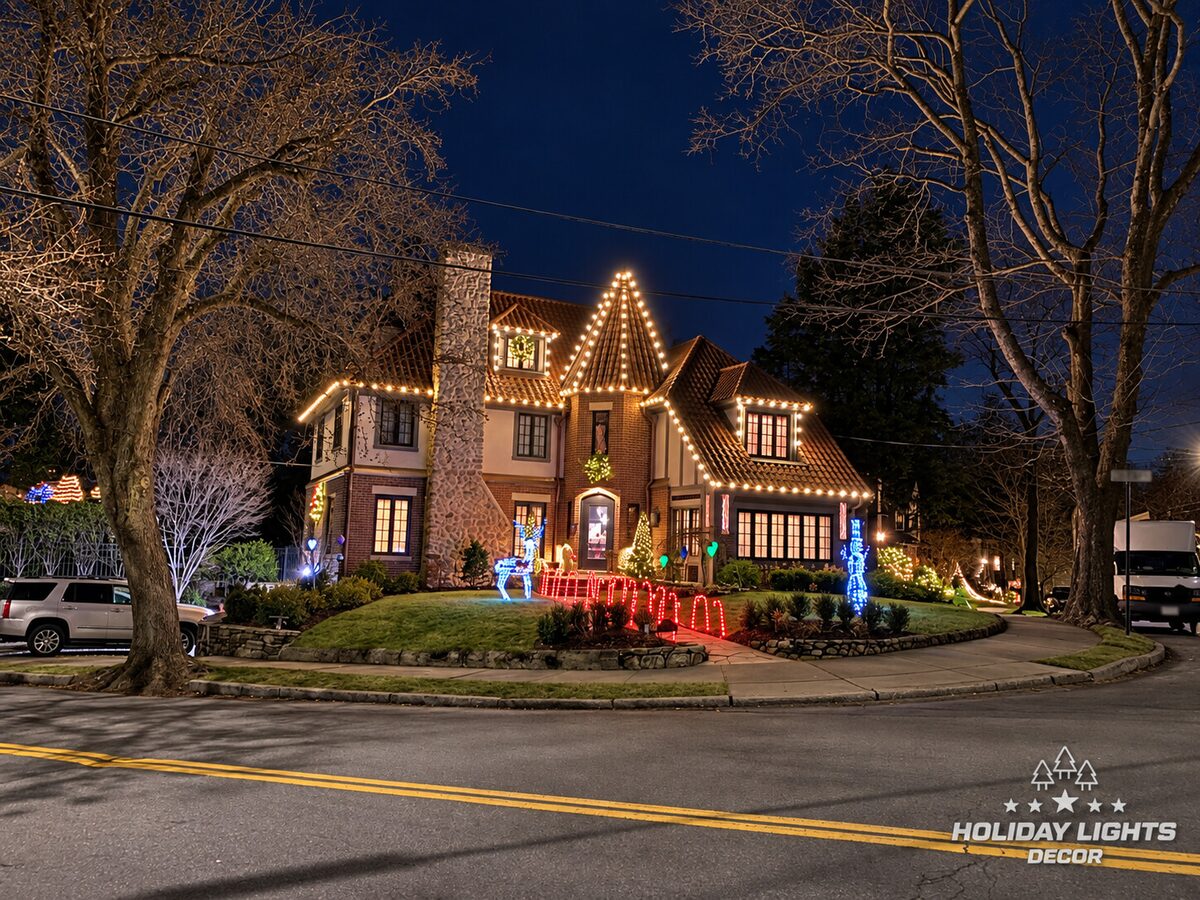
Holiday Lights Decor MA serves homeowners across Greater Boston, Middlesex County, Stoneham, Woburn, Burlington, Lexington, Winchester, and surrounding communities. Every installation — from simple gutter-line C9 runs to full whole-home displays — uses commercial-grade warm-white LED products.
We handle design, installation, takedown, and storage. You never touch a ladder. Request a free estimate and we'll walk you through the right lighting plan for your home.